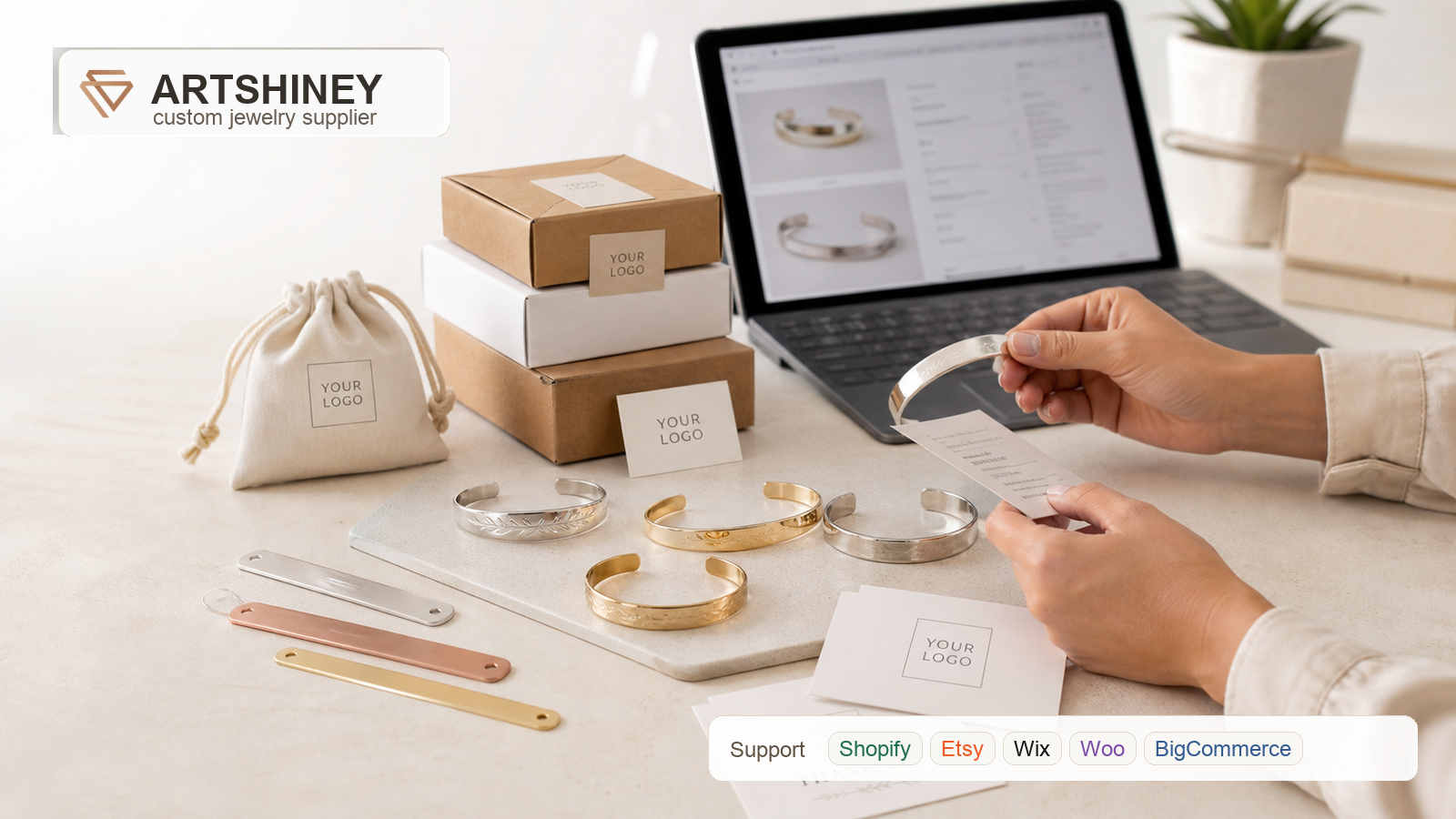

Custom Cuff Bracelet Supplier Strategy for 2026 Jewelry Sellers
Cuff bracelets are moving from a simple accessory item into a useful product strategy for ecommerce jewelry sellers. Google’s public 2026 spring fashion and beauty search trend roundup noted that interest in cuff bracelet reached an all-time high, while related statement jewelry searches also rose sharply. For merchants, that signal matters because cuffs sit at the intersection of trend visibility, personalization, giftability, and repeatable production.
The opportunity is not just to list one bracelet. A seller can build a cuff bracelet collection that supports engraving, finish variation, private-label packaging, seasonal gift bundles, and content-led merchandising. The risk is that a trend product can also expose weak sourcing: inconsistent plating color, unclear sizing expectations, fragile packaging, slow personalization, or product photos that promise more than fulfillment can deliver.
This guide explains how Shopify, WooCommerce, Wix, BigCommerce, and Etsy sellers can evaluate custom cuff bracelets from a supplier and operations perspective. If you need a jewelry partner that supports ecommerce sellers with product sourcing, customization, packaging, and fulfillment, Artshiney is built around that merchant workflow.
Why Cuff Bracelets Are Useful for Ecommerce Sellers
A cuff bracelet gives merchants more selling angles than many small accessories. The shape is visible in product photography, the surface can support engraving or pattern details, and the open structure makes size communication easier than a closed bangle. That makes cuffs practical for sellers who want a trend-led item without building a large ring-size or chain-length inventory system.
Trend Demand Is Only Valuable When the Product Can Scale
A rising search term can bring attention, but it does not automatically create profit. A seller still needs a product that can be photographed clearly, described honestly, packed consistently, and fulfilled within the promised time. Cuff bracelets are attractive because one core silhouette can become several SKUs through finish, width, engraving, surface texture, and packaging options.
Merchants can use Artshiney’s product catalog to study broader jewelry categories before narrowing into bracelet styles, then compare what can support a complete store collection instead of a one-product test.
How to Choose a Custom Cuff Bracelet Supplier
The right supplier choice should reduce operational uncertainty. A merchant should ask whether the supplier can keep finishes consistent across batches, support personalization without frequent remake errors, protect products in shipping, and provide enough SKU structure for platform selling.
| Supplier Check | Why It Matters | Merchant Risk if Ignored |
|---|---|---|
| Finish consistency | Gold, silver, and rose gold colors must look consistent in repeat orders and product photos. | Reviews mention color mismatch or a different item than advertised. |
| Engraving expectations | Personalized cuffs need clear character limits, placement rules, and preview expectations. | Customers request refunds because names, dates, or initials look different than expected. |
| Surface and edge quality | Cuffs touch the wrist directly, so rough edges or uneven polishing can damage perceived quality. | Low star reviews reduce conversion on marketplaces and paid traffic pages. |
| Packaging options | Giftable jewelry needs boxes, pouches, cards, and inserts that match the seller’s brand. | The product feels like a commodity even when the design is personalized. |
| Fulfillment workflow | Orders should move from customization to QC to packing with traceable steps. | Slow handling times hurt ad performance and customer confidence. |
For sellers comparing custom jewelry sourcing options, Artshiney as a custom jewelry supplier can help merchants evaluate product direction, customization, packaging, and fulfillment as one connected operating system.
Product Positioning: Make Cuffs More Than a Trend
A cuff bracelet should have a clear reason to exist inside the store. Otherwise, it becomes another accessory competing only on price. Merchants can position cuff bracelets around gift moments, everyday statement styling, initial or name personalization, bridal party accessories, friendship sets, or minimalist metal stacks.
Build a SKU Ladder
A strong cuff bracelet collection usually has a simple ladder:
- Entry SKU: one polished or lightly textured cuff in a best-selling finish.
- Personalized SKU: engraved name, date, initials, or short message.
- Gift SKU: bracelet plus YOUR LOGO box, pouch, and card.
- Bundle SKU: two cuffs, a cuff plus necklace, or a seasonal set.
- Premium SKU: wider cuff, special finish, or more detailed surface design.
This structure lets a seller test demand without creating an unmanageable catalog. It also improves average order value because customers can move from a simple bracelet to a gift-ready or personalized version.
Customization and Packaging Shape Conversion
Custom cuff bracelets sell best when customers understand what they are buying before checkout. Merchants should use product pages that show the cuff width, finish options, engraving placement, character limit, packaging appearance, and expected fulfillment time.
Packaging is especially important because bracelets are often bought as gifts. A plain product can still feel premium when the opening experience is coherent. The box, pouch, insert card, and thank-you card should carry the merchant’s own brand, not the supplier’s brand. That is why custom packaging visuals should use the seller’s mark, such as YOUR LOGO, while Artshiney remains the supplier and publisher brand behind the blog content.
Sellers planning this customer experience can review Artshiney brand services to think through packaging, brand presentation, and private-label details before they scale paid traffic.
Platform Strategy for Shopify, Etsy, Wix, WooCommerce, and BigCommerce
Different ecommerce channels need different cuff bracelet launch tactics. The product may be the same, but the risk profile is not.
| Sales Channel | Best Cuff Bracelet Angle | Operational Focus |
|---|---|---|
| Shopify | Brand-led collection page with upsells and email capture. | Strong photography, landing page copy, and repeat-purchase offers. |
| Etsy sellers | Personalized gift listings and clear handmade-style storytelling. | Accurate processing times, customization instructions, and review protection. |
| Wix | Simple boutique store with curated product stories. | Easy navigation, clean product options, and brand trust signals. |
| WooCommerce | SEO content plus flexible product variants. | Structured descriptions, option clarity, and reliable fulfillment data. |
| BigCommerce | Multi-SKU catalog expansion and category merchandising. | Consistent SKU naming, variant organization, and scalable product data. |
Before deciding which cuff bracelet styles to test, sellers can use Artshiney’s jewelry product discovery tools to compare product directions and avoid building a store around only one search spike.
Quality Control Points That Protect Reviews
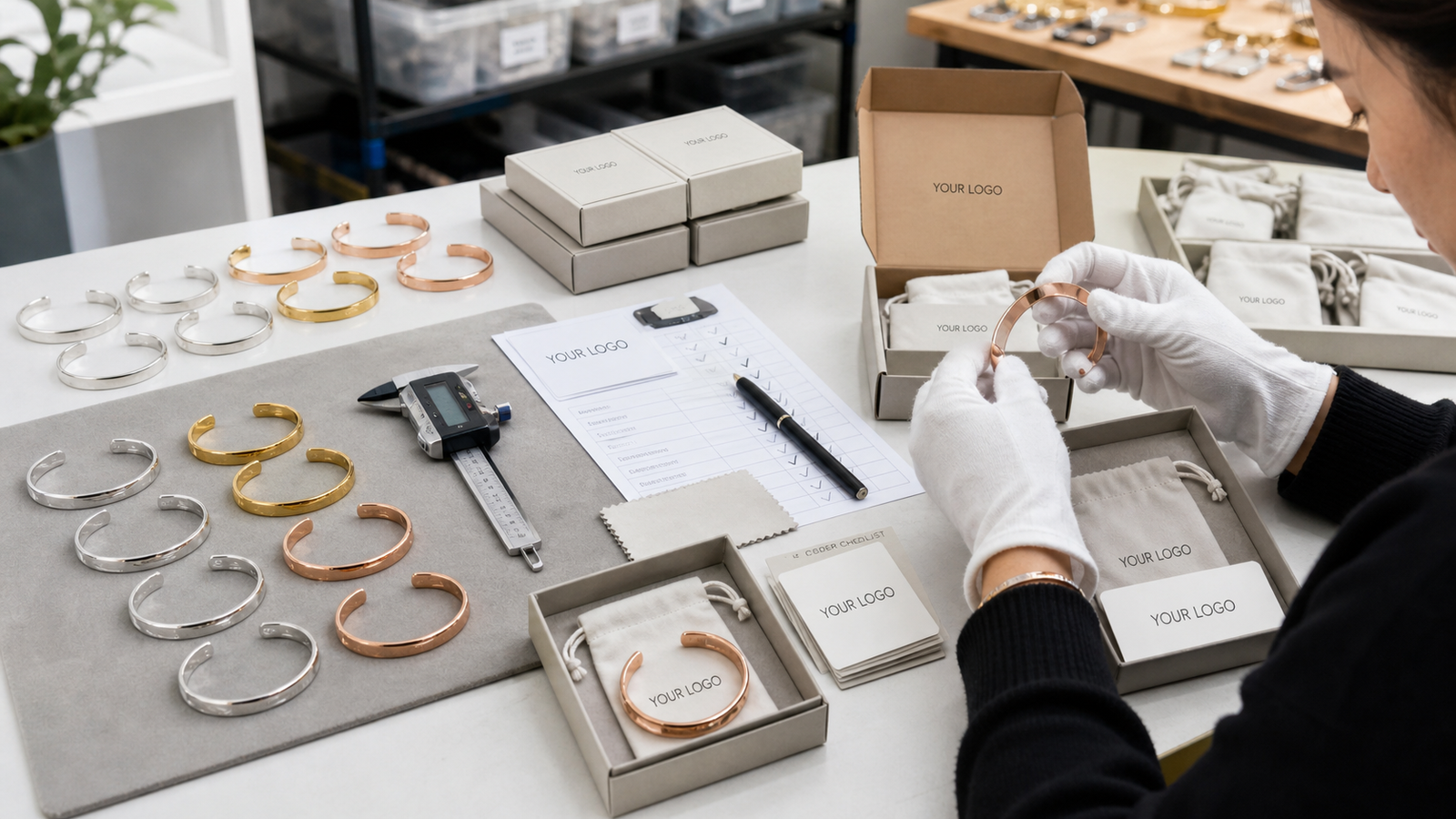
Reviews decide whether a jewelry trend becomes a repeatable product line. Customers usually judge bracelets by comfort, finish, engraving accuracy, packaging, and whether the item matches photos. A merchant should ask the supplier how these checks are handled before the first campaign goes live.
QC Questions to Ask Before Launch
- Are bracelet edges checked for comfort before packing?
- Are finish colors compared across batches?
- Are personalized names, dates, and initials checked against order data?
- Are items photographed or verified before shipment when customization is complex?
- Are packaging components matched to the correct order and brand identity?
- Are remake or damage rules clear before the seller advertises the product?
These questions are not only about manufacturing. They affect ad performance, support tickets, refund rate, and the lifetime value of a customer who may return for matching jewelry or seasonal gifts.
Launch Plan: From Trend Signal to Sellable Collection
A practical launch should move in stages. First, validate the visual direction with a small set of cuff bracelets. Second, add personalization and packaging once the product photography and positioning are clear. Third, build bundles and seasonal landing pages after early customer feedback confirms what people buy and review positively.
A 30-Day Merchant Workflow
| Stage | Merchant Action | Success Signal |
|---|---|---|
| Days 1-7 | Choose 3-5 cuff styles, finishes, and personalization rules. | Clear product-page angle and manageable SKU structure. |
| Days 8-14 | Prepare product photos, packaging mockups, and sizing guidance. | Lower buyer confusion before checkout. |
| Days 15-21 | Launch organic content, marketplace listings, or a small paid test. | Clicks and saves show which finish or message performs best. |
| Days 22-30 | Review conversion, support questions, remake issues, and customer feedback. | Data supports adding bundles, gift packaging, or related jewelry. |
If you need details about seller workflows, order expectations, or platform support, Artshiney’s seller FAQ is a useful place to review common operating questions before building your launch plan.
FAQ
Are cuff bracelets a good product for personalized jewelry sellers?
Yes, cuff bracelets can work well for personalized jewelry sellers because the surface can support names, dates, initials, or short messages. The key is to set realistic engraving limits and show customers where the personalization will appear.
Can Etsy sellers use Artshiney for cuff bracelet sourcing?
Artshiney supports Etsy sellers as ecommerce merchants, but sellers should not assume a direct Etsy app integration unless they have verified it in their own workflow. Etsy sellers should focus on accurate personalization instructions, processing times, and review protection.
What makes a cuff bracelet supplier reliable?
A reliable supplier should offer consistent finishes, comfortable edges, clear customization rules, careful packaging, and a fulfillment process that reduces order mismatch. These details affect reviews as much as the design itself.
Should a seller launch one cuff bracelet or a full collection?
Start with a focused collection rather than a single isolated SKU. A small set of finishes, personalization options, and gift-ready packaging gives customers choice without making operations too complex.
How can private-label packaging improve cuff bracelet sales?
Private-label packaging turns a simple bracelet into a giftable brand experience. Boxes, pouches, insert cards, and thank-you cards can improve perceived value, encourage repeat purchases, and make customer photos more shareable.
Build a Cuff Bracelet Line With a Supplier Workflow
A trend becomes valuable when it can be turned into a dependable customer experience. Cuff bracelets give sellers a strong base for personalization, gift packaging, and collection building, but the launch should be supported by supplier consistency, quality checks, and fulfillment discipline.
To explore custom bracelets, private-label packaging, product discovery, and ecommerce-friendly fulfillment, start with Artshiney today and build the product system behind your next jewelry collection.