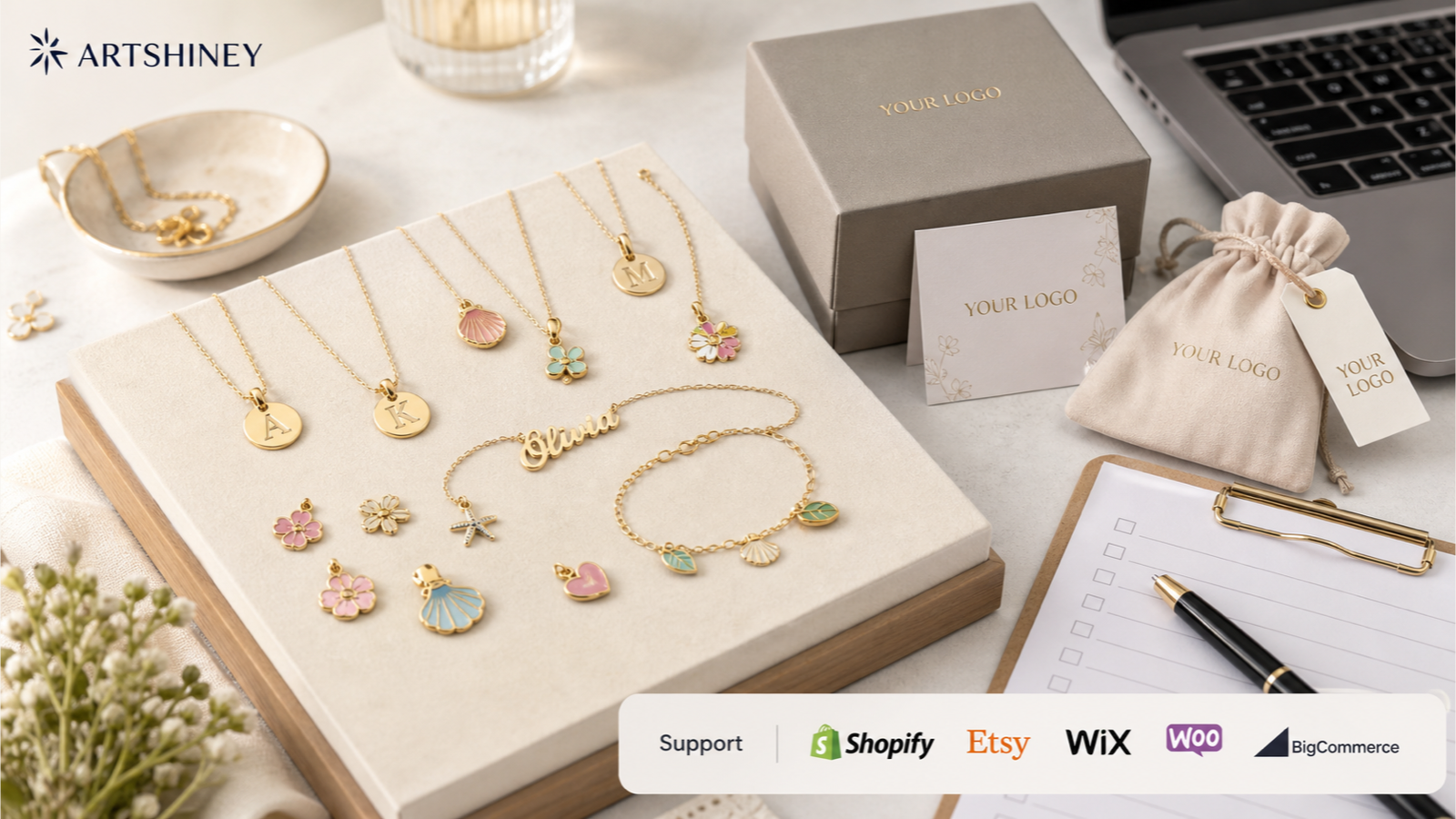

Summer jewelry demand is moving beyond one clean pendant or one classic chain. Current Google search pages around charm necklaces, cuff bracelets, statement necklaces, and whimsical jewelry show a mix of trend roundups, marketplace listings, gift ideas, and product-led shopping pages. Etsy seller trend coverage has also pushed playful, expressive, and whimsical accessories into the merchant conversation. For Shopify, WooCommerce, Wix, BigCommerce, and Etsy sellers, that creates a useful opening: personalized jewelry can feel fun and seasonal, but it still needs a disciplined supply chain.
The opportunity is not simply to add a few cute charms. A merchant needs a repeatable collection system: base pieces, personalized add-ons, material expectations, packaging rules, production checks, and fulfillment timing that can hold up when a product begins to sell. Artshiney can fit that workflow as a custom jewelry supplier for sellers who want product variety, private-label presentation, and dropshipping-friendly operations without building every process from scratch.
Why whimsical personalized jewelry is a merchant opportunity now
Whimsical jewelry works because it gives customers a visible way to signal identity, mood, travel plans, friendship, school memories, hobbies, pets, names, initials, and seasonal style. The same buyer who hesitates on a generic pendant may react faster to a charm, initial, nameplate, shell, flower, heart, star, birth month detail, or color accent that feels personal. That is useful for ecommerce sellers because personalization can improve product differentiation without requiring a completely new manufacturing category for every idea.
The risk is that whimsical products can become operationally messy. Too many charm choices, unclear materials, inconsistent plating tone, weak packaging, or slow customized fulfillment can turn a promising trend into refunds and low reviews. Sellers should treat the trend as a collection architecture problem, not just a design mood.
Build the collection as a system, not a single product
A strong whimsical personalized jewelry launch usually starts with a small number of base SKUs and controlled customization choices. That keeps product pages easier to understand, reduces production errors, and lets the merchant test demand before expanding the range.
| Seller decision | Commercial impact | Operational question to answer |
|---|---|---|
| Base jewelry type | Necklaces, bracelets, earrings, and rings create different price points and gift occasions. | Can the supplier keep chain length, clasp style, plating tone, and component fit consistent? |
| Personalization layer | Initials, nameplates, birth details, and charm choices increase perceived relevance. | How are spelling, charm placement, engraving, and order notes checked before production? |
| Theme range | Shells, florals, stars, hearts, pets, travel, and color accents let the store target micro-audiences. | Can low-performing options be removed without disrupting the core product page? |
| Private-label packaging | Gift-ready presentation can support higher trust, repeat purchases, and review quality. | Can boxes, pouches, thank-you cards, inserts, and labels stay visually consistent? |
| Fulfillment model | Dropshipping or inventory-light testing reduces upfront risk. | What production and shipping expectations should be shown clearly on the product page? |
Use a narrow first drop
For a first drop, a seller might launch one charm necklace, one initial pendant, one personalized bracelet, and one small earring or ring option. That is enough to test the theme across different price points while keeping photography, descriptions, and quality checks manageable. Artshiney’s product catalog can help sellers compare ready-made and customizable jewelry ideas before committing to a broader assortment.
Supplier consistency matters more when the style is playful
Whimsical jewelry can look casual, but customers still judge it by serious signals: whether the plating looks even, whether the chain feels appropriate for the pendant weight, whether an enamel flower is centered, whether a name is spelled correctly, whether a charm order matches the product photo, and whether the packaging feels giftable. A playful product has to feel intentional, not random.
Before advertising, sellers should define material and finish expectations in plain language. If a product uses stainless steel, brass, alloy, silver-color plating, gold-color plating, enamel, stones, acrylic, or other components, the listing should explain those choices accurately. Avoid vague language such as “premium quality” unless the page shows what quality means: finish consistency, component alignment, personalization proofing, packaging condition, and fulfillment communication.
Artshiney’s jewelry product discovery tools are useful at this stage because the seller can look for product directions that fit the store’s audience instead of guessing from one viral trend. The goal is to find items that can survive real orders, not only look attractive in a mood board.
Private-label packaging turns a trend into a brand memory
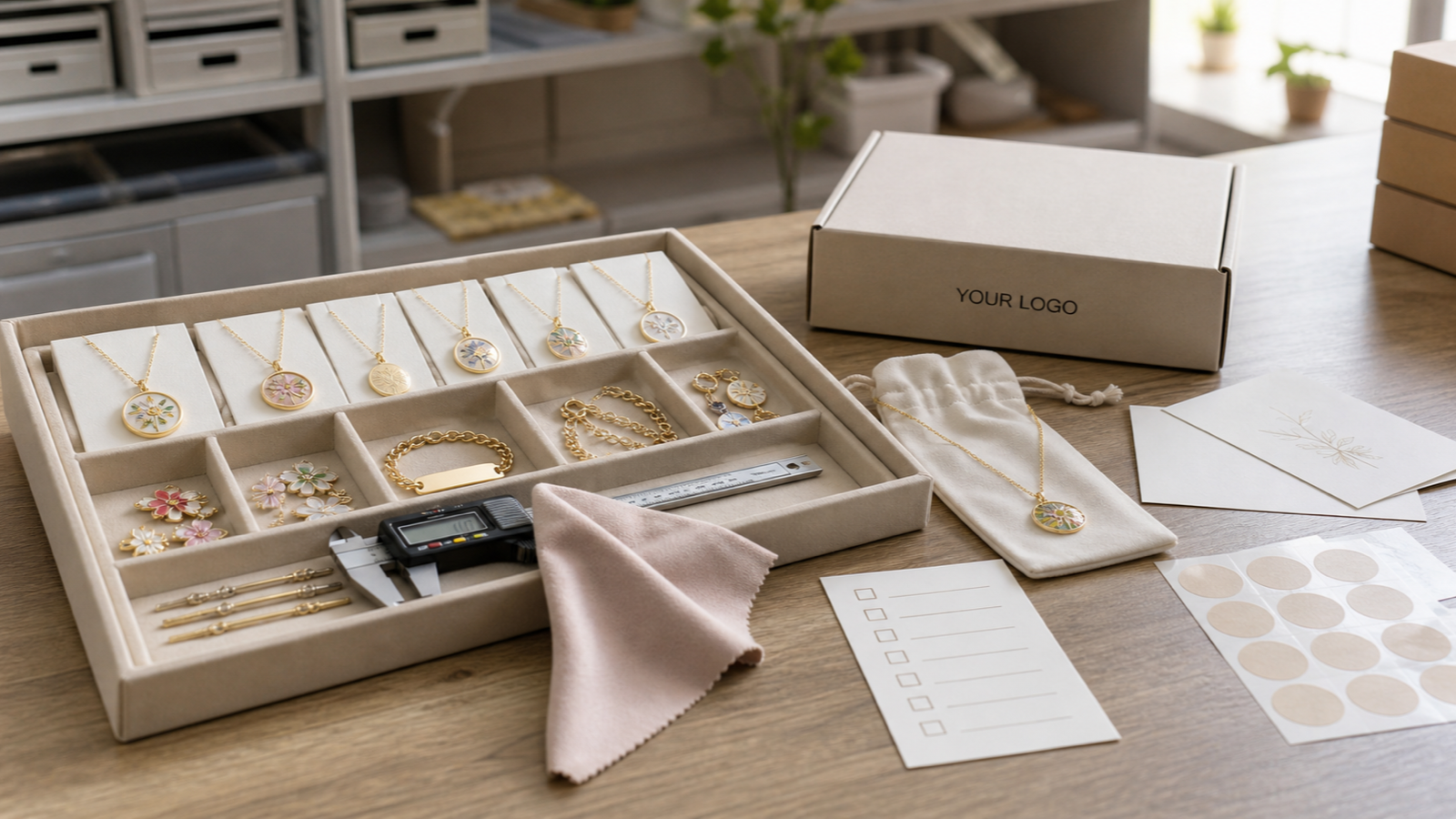
Many whimsical jewelry purchases are gifts, impulse treats, or emotional self-purchases. Packaging therefore affects more than aesthetics. A clean jewelry box, pouch, thank-you card, care insert, label, and order presentation can influence whether the buyer feels comfortable leaving a positive review, posting an unboxing photo, or coming back for a second charm or companion piece.
The packaging should belong to the merchant’s store, not the supplier. That is why private-label planning should use the merchant’s own logo, color system, and customer message. Artshiney brand services are especially relevant for sellers who want packaging, brand presentation, and jewelry sourcing to feel connected instead of pieced together from separate vendors.
Think about the second purchase before the first order ships
A whimsical jewelry collection has natural repeat-purchase paths: a buyer may return for another initial, a new seasonal charm, a matching bracelet, a bridesmaid gift, a birthday piece, or a friend set. Packaging inserts can support that behavior with a short brand story, care guidance, and a simple next-purchase idea. The insert should not overwhelm the customer; it should make the store feel organized and worth remembering.
Platform strategy: Shopify, WooCommerce, Wix, BigCommerce, and Etsy sellers
Different platforms need different launch discipline. Shopify and BigCommerce sellers may focus on landing pages, bundles, email flows, and paid traffic testing. WooCommerce and Wix sellers often need clean product options, page speed discipline, and clear photography. Etsy sellers need marketplace-native positioning, accurate personalization fields, review protection, and search-friendly titles without overclaiming production speed.
Unless a direct app integration has been verified, Etsy should be described carefully: the business opportunity is to support Etsy sellers with products, private-label presentation, and fulfillment planning, not to claim an Etsy app integration. Sellers who operate across several channels should keep product naming, photos, materials, and shipping expectations consistent so customers do not see conflicting information from one storefront to another.
For multi-channel sellers, Artshiney’s seller FAQ is a practical page to review while planning account setup, default values, order expectations, and platform workflow questions. It should sit alongside the seller’s own margin model, advertising tests, and customer service standards.
QC checklist for whimsical custom jewelry
Quality control should be visible in the seller’s process even when the customer never sees the checklist. Before scaling ads or adding many variations, review these areas:
- Personalization accuracy: names, initials, charm order, engraving notes, color choices, and quantity.
- Material consistency: metal tone, chain length, clasp function, pendant weight, enamel placement, and stone or charm alignment.
- Photography truthfulness: product photos should reflect the actual color, size, and finish customers will receive.
- Packaging condition: box, pouch, insert, label, and thank-you card should arrive clean and aligned with the store’s brand.
- Fulfillment clarity: production time, customization limits, shipping expectations, and customer service responses should be stated before purchase.
- Review risk: fragile components, unclear personalization fields, and packaging inconsistency should be fixed before traffic increases.
This is where Artshiney as a custom jewelry supplier can help merchants think beyond a single listing. The supplier relationship should support product selection, customization, packaging, and operational repeatability.
How to use the trend without overbuilding inventory
Whimsical personalized jewelry is a good match for inventory-light testing because demand can shift quickly by season, platform, and audience. Instead of buying deep inventory for every charm or finish, sellers can test a controlled range, monitor product page conversion, track personalization errors, and expand only the pieces that produce orders and positive feedback.
A practical launch sequence might look like this: pick one theme, build three to five SKUs, prepare consistent product photos, write clear material and personalization rules, add private-label packaging, publish on the strongest channel first, then expand to the next platform after the fulfillment process is proven. Start with Artshiney today if you want a jewelry sourcing and fulfillment partner that fits a custom, private-label, seller-focused workflow.
FAQ: whimsical personalized jewelry for ecommerce sellers
What is whimsical personalized jewelry?
It is jewelry that combines playful visual themes with personal details, such as initials, names, charms, color accents, florals, shells, hearts, stars, pets, or symbolic motifs. For sellers, the value is that the product can feel specific to a customer while still using a controlled supplier workflow.
Is this trend only for Etsy sellers?
No. Etsy sellers can benefit because the marketplace has strong gift and personalization behavior, but Shopify, WooCommerce, Wix, and BigCommerce sellers can also use whimsical jewelry in bundles, seasonal campaigns, email flows, influencer drops, and repeat-purchase programs.
How many designs should a seller launch first?
Start narrow. Three to five controlled SKUs are usually easier to photograph, explain, fulfill, and measure than a large untested assortment. Add options only after you understand conversion, personalization mistakes, production timing, and review feedback.
Why does packaging matter for personalized jewelry?
Personalized jewelry often carries emotional value. Packaging affects gift readiness, perceived quality, unboxing behavior, reviews, and repeat purchase. A private-label box, pouch, thank-you card, or insert can make a small item feel like a real brand experience.
How can Artshiney support a seller’s launch?
Artshiney supports ecommerce jewelry merchants with product sourcing paths, custom jewelry options, private-label brand services, and seller-facing workflow pages that help merchants plan beyond a single trending product.
Final takeaway
Whimsical personalized jewelry can be a strong summer 2026 opportunity, but only if the seller treats it like a brand and operations system. The winning product is not just the cutest charm. It is the product that can be selected, customized, checked, packaged, shipped, reviewed, and reordered with confidence. For sellers building that kind of collection, Artshiney brand services and the broader Artshiney supplier workflow can turn a trend signal into a cleaner launch plan.