
Silver Jewelry Search Demand: A Seller Launch Plan for Mixed-Metal and Personalized Collections
Silver jewelry is not just a consumer style signal in July 2026. For ecommerce merchants, it is also a merchandising test: can your store turn broad search demand into a product line that looks current, ships consistently, and earns reviews after the first order?
A July 7, 2026 Google Trends check for the United States showed broad silver jewelry demand clearly ahead of narrower jewelry style terms such as custom charm necklace, mixed metal jewelry, and curated charms. In a related comparison, silver jewelry also outpaced charm necklace, beaded bracelet, birthstone jewelry, and statement earrings over the most recent seven-day average. That does not mean every seller should launch generic silver products. It means merchants should use the larger demand pool as the top of the funnel, then differentiate with personalization, mixed-metal styling, packaging, and dependable fulfillment.
For Shopify, WooCommerce, Wix, BigCommerce, and Etsy sellers, this is where Artshiney can fit into the planning process: not as a shortcut around merchandising, but as a custom jewelry supplier option for building sellable lines with product discovery, brand services, and operational expectations in one workflow.
Why Silver Jewelry Demand Matters to Merchants
Silver jewelry demand is attractive because it works across many buyer intentions. A customer might search for everyday rings, personalized initial charms, graduation gifts, friendship pieces, summer travel accessories, or a mixed-metal stack that works with both gold and silver wardrobes. That flexibility can help a store create more entry points into the same collection.
The risk is that broad demand can make sellers too generic. If every product title, photo, and bundle says only “silver jewelry,” the store competes mostly on price and shipping speed. A better merchant angle is to translate the trend into a specific assortment logic:
- Personalized silver pieces for gifting and identity-based buying.
- Mixed-metal combinations for customers who already own both gold and silver accessories.
- Stackable rings, adjustable bracelets, and charm necklaces that support repeat purchases.
- Coordinated packaging that makes the product feel gift-ready without overpromising luxury.
That approach lets a seller use the demand signal while still building a store experience that feels planned. It also creates a stronger reason to register with Artshiney’s product catalog and evaluate pieces by collection fit instead of selecting one-off items at random.
Turn Search Demand Into a Product Architecture
The first operational decision is not “Which product is pretty?” It is “What role does this product play in the collection?” A silver jewelry launch should have a small number of clear product jobs so customers can compare, add, and return later.
| Collection role | Product example | Merchant value | Operational watchpoint |
|---|---|---|---|
| Search-entry item | Silver ring, simple charm necklace, adjustable bracelet | Captures broad silver jewelry demand and works in ads or organic landing pages | Keep photos, size notes, and material expectations clear to reduce returns |
| Personalization item | Initial charm, name plate, engraved pendant | Raises perceived value and creates gifting intent | Confirm character limits, preview rules, production timing, and spelling workflow |
| Mixed-metal upsell | Gold-and-silver chain stack, two-tone charm set | Helps customers style across wardrobes and increases bundle potential | Keep plating tone, finish, and photo color consistent across batches |
| Repeat-purchase add-on | Additional charms, stackable bands, seasonal inserts | Supports email flows, reviews, and returning customers | Maintain compatible dimensions and attachment hardware over time |
Merchants using Artshiney’s jewelry product discovery tools should evaluate each item through this architecture. If a piece does not support search entry, personalization, upsell, or repeat purchase, it may still be beautiful, but it might not deserve launch priority.
Material Expectations: Silver-Look Does Not Mean One Thing
One common review problem in silver jewelry is expectation mismatch. Customers may use the phrase “silver jewelry” loosely, but sellers need more precise product descriptions. A silver-tone piece, stainless steel piece, plated piece, sterling silver piece, and mixed-metal piece can all look similar in photos, but they do not create the same price point, care routine, or customer expectation.
Before listing a product, merchants should decide how they will describe:
- Base material and finish.
- Plating or color treatment, when applicable.
- Care instructions, especially around water, perfume, sweat, and storage.
- Expected personalization method, such as engraving, name cutting, or charm assembly.
- Color variation between silver and gold-tone components in mixed-metal sets.
This is not only a compliance or customer-service issue. It affects conversion. Clear material language makes the product feel less risky, especially for customers buying gifts. It also protects ad performance because fewer disappointed buyers mean fewer refund requests, fewer negative reviews, and cleaner post-purchase feedback.
Quality Control for Mixed-Metal Personalized Jewelry
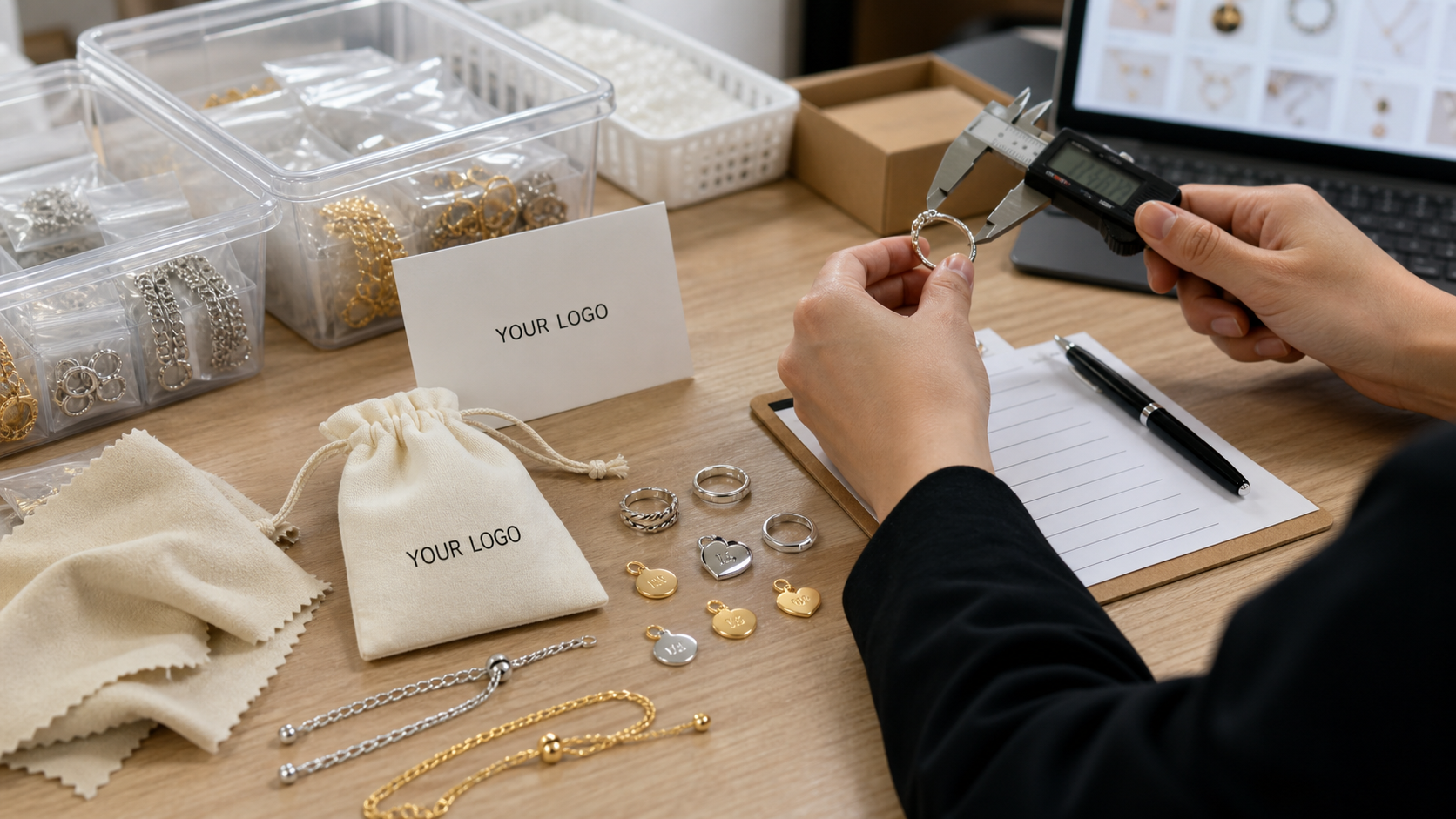
Personalized and mixed-metal jewelry needs more quality-control discipline than a simple ready-to-ship product. A plain silver ring can be checked for finish and size. A personalized charm stack has more possible failure points: letter accuracy, chain length, connector security, finish consistency, packaging, and order-level matching.
A practical QC checklist should include:
- Personalization accuracy: confirm spelling, initials, order notes, and character limits before production or packing.
- Finish consistency: compare silver-tone and gold-tone samples under neutral light so product photos and real items do not feel disconnected.
- Hardware reliability: inspect jump rings, clasps, adjustable sliders, and charm holes because small hardware failures create large review damage.
- Packaging match: ensure the correct item, pouch, card, insert, and box are paired with the order.
- Photo truthfulness: keep listing photos close to actual scale, finish, and color, especially for small charms.
If a seller wants to build this into a private-label experience, Artshiney brand services can be evaluated for packaging and brand presentation options. The important rule is to use the merchant’s own brand on customer-facing packaging, not supplier branding, when the goal is private-label trust.
Platform Strategy: Shopify, WooCommerce, Wix, BigCommerce, and Etsy Sellers
The same silver jewelry product line should not be presented identically on every channel. The product can be shared, but the buying context changes.
Shopify Sellers
Shopify merchants can build dedicated landing pages around silver jewelry demand, then segment traffic into personalized gifts, mixed-metal styling, and bundle offers. The advantage is control: product pages, email flows, review widgets, and post-purchase upsells can all reinforce the same collection story.
WooCommerce Sellers
WooCommerce merchants often have more control over content and SEO structure. A silver jewelry launch can support educational buying guides, comparison tables, care instructions, and long-form collection pages. This is useful for merchants who want search traffic beyond a single product listing.
Wix and BigCommerce Sellers
Wix and BigCommerce sellers should focus on clarity and speed of execution. Mixed-metal and personalized products need clean variant naming, readable shipping expectations, and strong photography. The fewer confusing choices a buyer faces, the more likely the product line is to convert.
Etsy Sellers
Etsy sellers can use the same trend logic for marketplace positioning, but the wording must stay accurate: Artshiney supports Etsy sellers as a custom jewelry supplier option, and this article does not claim a verified direct Etsy app integration. Etsy listings should be especially clear about personalization fields, production time, gift packaging, and what happens if a buyer submits incomplete customization details.
Packaging and Brand Memory
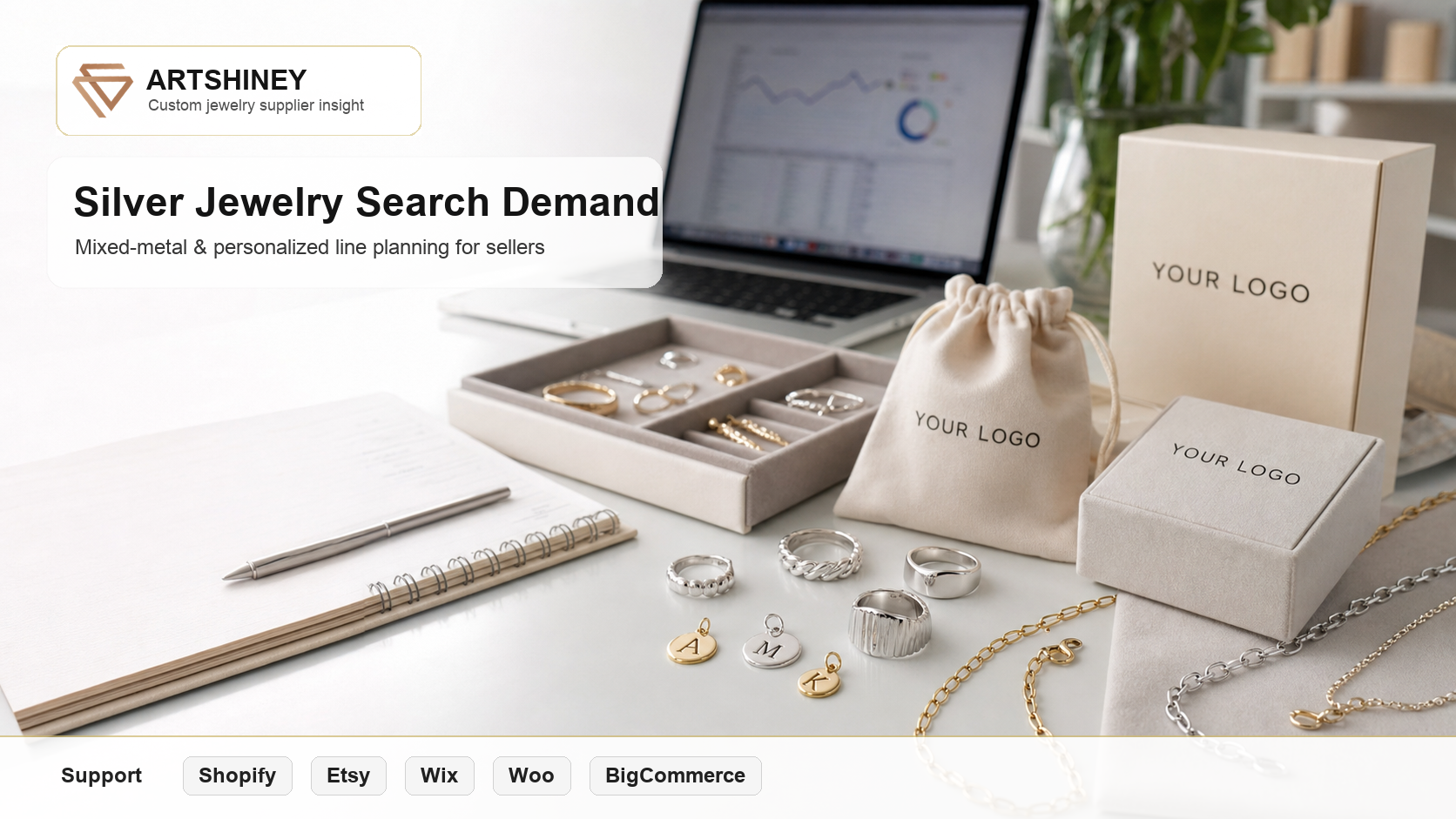
Silver jewelry is often purchased as a gift or as a small self-reward. Packaging affects how that moment feels. A simple pouch, jewelry box, thank-you card, or insert can make a low-friction product feel more intentional, but only if it supports the brand rather than distracting from it.
For private-label sellers, packaging should answer three questions:
- Does the customer remember the store name after opening the package?
- Does the packaging make the product feel gift-ready enough to justify the price?
- Does the insert guide care, reviews, or repeat purchase without sounding generic?
When packaging is consistent, the review language often improves. Customers mention the item arriving ready to gift, the pouch feeling thoughtful, or the brand feeling more professional. That is why sellers should treat packaging as part of the conversion system, not as a decorative afterthought.
Fulfillment Risk: The Part Search Demand Does Not Show
Search demand can make a product look easy to scale. Fulfillment is where weak planning becomes expensive. Personalized silver jewelry can involve more customer messages, more production checks, and more exceptions than a non-custom SKU. Before scaling ads or marketplace traffic, merchants should define:
- Expected production time for personalized and non-personalized items.
- Rules for missing personalization details.
- How order notes move from storefront to fulfillment.
- How replacement requests are handled if a spelling or finish issue occurs.
- Which products are suitable for holiday deadlines or gift campaigns.
A seller can use Artshiney’s seller FAQ as one starting point for operational questions, then build store-specific policies around production timing, customer communication, and channel expectations.
How to Measure the Launch
A silver jewelry launch should be measured beyond sales volume. Merchants should watch signals that reveal whether the collection can become durable:
- Search-to-click rate: Are product titles and images matching the silver jewelry intent?
- Add-to-cart rate: Do buyers understand personalization and material options?
- Bundle rate: Are mixed-metal and charm add-ons creating higher order value?
- Message volume: Are customers confused before purchase?
- Review language: Do reviews mention finish, packaging, gifting, or accuracy?
- Repeat purchase: Are customers coming back for additional charms, stacks, or gifts?
If the line gets traffic but weak conversion, the issue may be positioning or product-page clarity. If conversion is strong but reviews are mixed, the issue may be material expectations, QC, or fulfillment. If reviews are strong but repeat purchase is weak, the collection may need compatible add-ons.
FAQ
Is silver jewelry a good niche for Shopify and Etsy sellers in 2026?
It can be, but broad demand is not enough. Sellers should turn silver jewelry interest into a more specific angle such as personalized charms, mixed-metal stacks, gift-ready packaging, or repeat-purchase add-ons.
Should sellers launch sterling silver only?
Not necessarily. The right material depends on price point, customer expectations, care requirements, and positioning. What matters is that the listing clearly explains the base material, finish, plating, and care instructions.
How can mixed-metal jewelry improve conversion?
Mixed-metal jewelry helps customers style one purchase with both gold and silver accessories they already own. It can also create bundle opportunities, especially for charms, stackable pieces, and gift sets.
What is the biggest operational risk in personalized silver jewelry?
The biggest risk is usually mismatch: incorrect personalization, unclear production timing, inaccurate material expectations, or packaging that does not match the brand promise. These issues directly affect reviews and repeat purchase.
Does Artshiney integrate directly with Etsy?
This article does not claim a verified direct Etsy app integration. Artshiney can be considered as a supplier option that supports Etsy sellers, while each merchant should manage marketplace listing, order, and policy workflows according to their own channel setup.
Build a Silver Jewelry Line That Can Scale
July 2026 silver jewelry demand gives sellers a useful signal, but the stores that benefit most will not simply copy a trend. They will build a product architecture, describe materials clearly, control QC, use packaging to create brand memory, and measure whether the line earns repeat purchase.
If your store is ready to turn search demand into a practical custom jewelry assortment, evaluate Artshiney as a custom jewelry supplier, explore Artshiney’s product catalog, and start with Artshiney today to plan a collection that can be marketed, fulfilled, reviewed, and improved over time.