
Bold Personalized Jewelry: A Seller Launch Guide for 2026
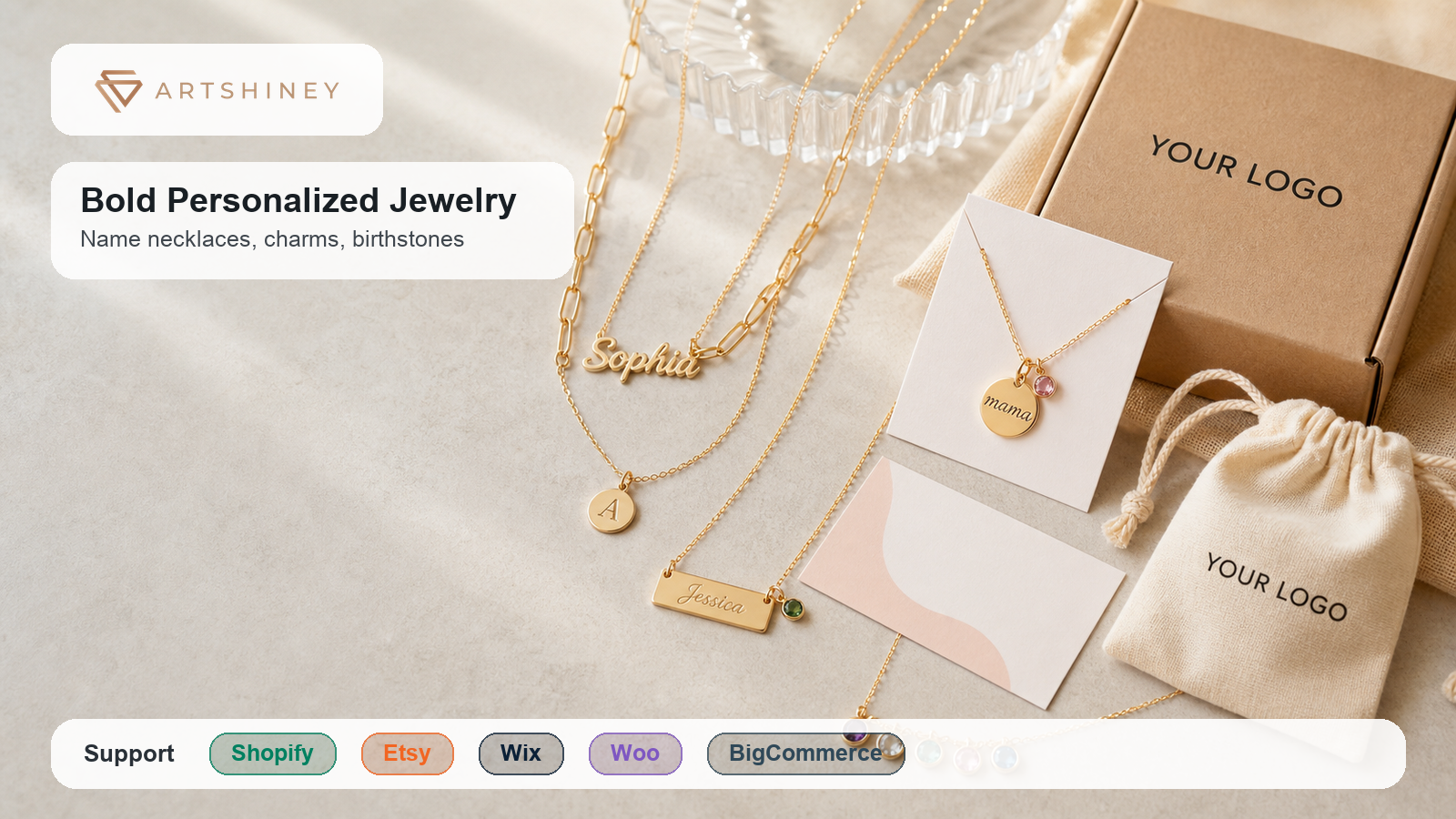
Bold personalized jewelry is showing up across current jewelry search results and trend coverage because it solves two buyer needs at once: customers want pieces that feel expressive and personal, while ecommerce stores need products that can stand out in crowded feeds. Initial necklaces, nameplate styles, birthstone charms, layered pendants, colorful stones, and gift-ready packaging all give sellers a stronger story than another generic accessory listing.
For merchants, the opportunity is not just adding a trendy necklace to a product page. A stronger launch connects product choice, customization rules, material expectations, private-label packaging, quality control, fulfillment timing, and post-purchase review protection. Artshiney can support that workflow for sellers who want custom jewelry sourcing and ecommerce-ready brand presentation without turning every order into a manual production problem.
Why bold personalization is a useful 2026 angle
Current SERP context around jewelry trends, personalized jewelry, name necklaces, charm necklaces, and birthstone jewelry points toward the same commercial pattern: shoppers are not only searching for simple initials. They are responding to identity-led pieces, layered styling, colorful stones, and products that feel made for a specific moment. Recent trend coverage also keeps returning to individuality, bright gemstones, charms, initials, and layered necklace styling.
Google Trends access through the local Python interface was unstable during this run, so this article does not invent numeric index values. The topic selection is based on live search result context, current fashion and ecommerce trend coverage, and visible marketplace language around personalized jewelry. For sellers, the practical takeaway is clear enough: search demand is rewarding specific product stories, not vague “custom jewelry” pages.
Build a product line, not a single viral SKU
A bold personalized jewelry launch should start with a controlled product architecture. The first collection can include one name necklace, one initial pendant, one birthstone charm option, one bracelet or anklet companion piece, and one gift-ready packaging set. That gives the store enough variety for bundles and upsells without creating too many customization paths to manage.
Sellers can use Artshiney’s product catalog to compare jewelry directions before committing to a launch range. When the goal is to discover products by audience, occasion, material expectation, or price point, Artshiney’s jewelry product discovery tools can help merchants move from trend inspiration to a practical sourcing shortlist.
| Launch choice | Why shoppers care | Seller risk to control |
|---|---|---|
| Bold name necklace | Names create identity, gifting value, and social-photo appeal. | Font readability, spelling, pendant scale, chain strength, and proofing. |
| Initial pendant or bracelet | Initials feel personal but are easier to merchandise than full names. | Letter inventory, finish consistency, clasp quality, and clear variation photos. |
| Birthstone charm add-on | Color adds emotional meaning and a natural upsell path. | Stone color accuracy, month labeling, charm placement, and returns expectations. |
| Layered necklace set | Layering makes the product look styled, not isolated. | Chain lengths, tangling risk, product photography, and bundle margin. |
| Private-label packaging | Gift-ready presentation can raise perceived value and review quality. | Logo placement, box/pouch consistency, insert accuracy, and damaged packaging. |
Keep customization choices tight at launch
More options are not always better. Too many fonts, chain lengths, stones, finishes, symbols, and packaging choices can lower conversion because customers hesitate. They also increase operational risk because every option creates another place for a production error. A narrow menu is easier to photograph, easier to explain, easier to fulfill, and easier to improve after the first round of data.
Material expectations matter more when the design is personal
Personalized jewelry carries emotional value, so disappointment can feel sharper when the physical product misses expectations. The product page should explain material, finish, chain length, clasp type, stone style, plating tone, care guidance, and production timing in plain language. If a design uses stainless steel, sterling silver, brass, alloy, gold plating, cubic zirconia, rhinestones, enamel, acrylic, or natural-style stones, the listing should say so accurately.
That clarity protects reviews. A shopper may accept normal care limits for plated jewelry if the page explains them before purchase. A customer is less likely to accept a surprise. The best personalized jewelry listings do not only sell emotion; they set a realistic expectation for what arrives in the box.
Private-label packaging turns a small item into a brand moment
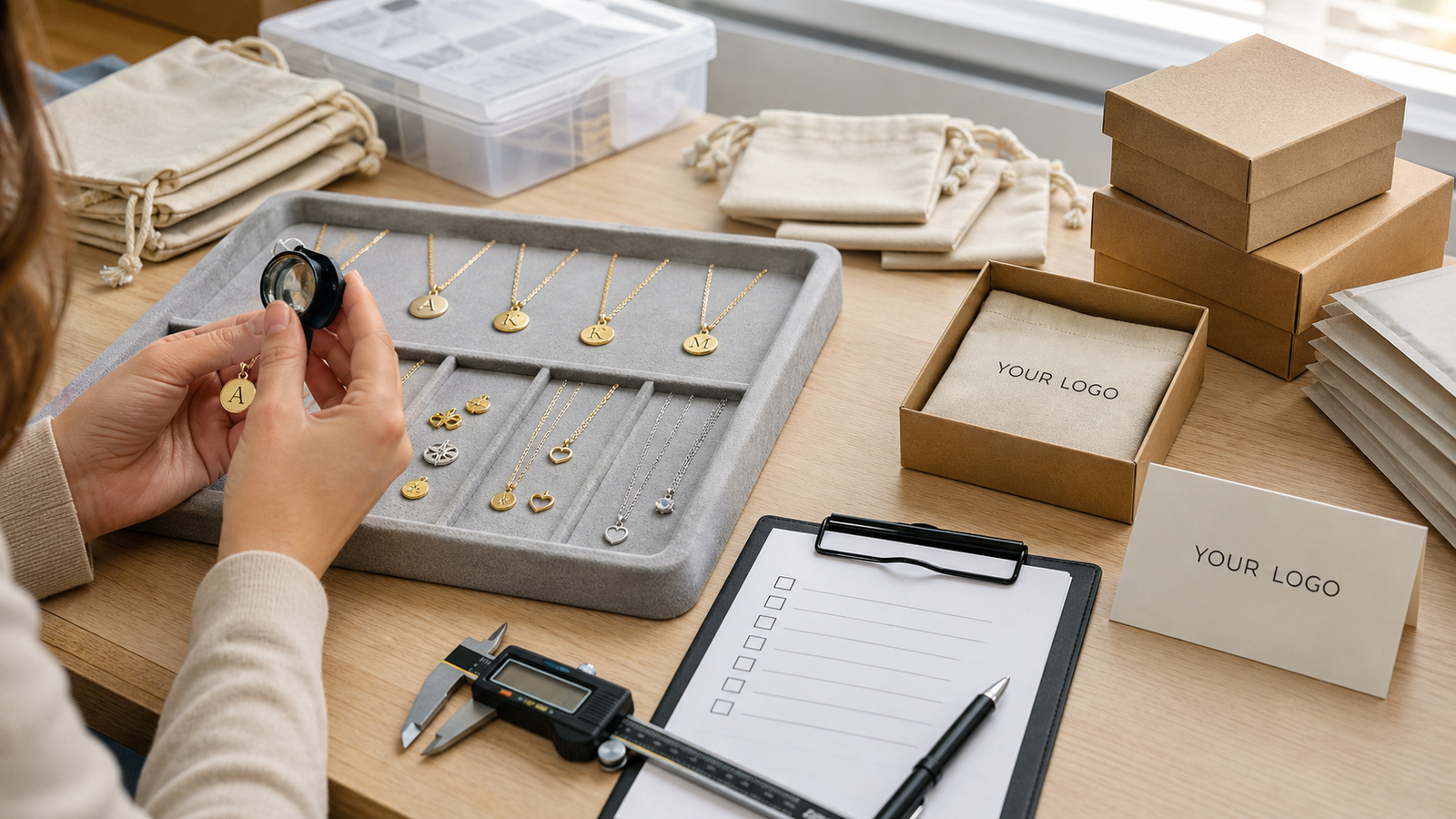
A necklace, bracelet, charm, or ring may be physically small, but the unboxing experience is not small to the customer. Personalized jewelry is often bought for birthdays, bridesmaids, graduations, anniversaries, family gifts, friendship gifts, memorial pieces, and self-purchase milestones. The box, pouch, jewelry card, thank-you note, care insert, and label can make the product feel ready to gift instead of merely shipped.
The branding on those pieces should belong to the merchant. Custom packaging, jewelry cards, thank-you cards, pouches, labels, and inserts should carry the seller’s own logo and message. Artshiney brand services are relevant when a store wants product sourcing and private-label presentation to feel consistent across multiple personalized jewelry launches.
Design packaging around repeat purchase
Packaging should do more than look clean in an unboxing photo. It should remind customers where they bought the piece, explain simple care steps, make gift giving easier, and invite the next purchase. For example, a thank-you card can point customers toward a matching bracelet, a seasonal charm, or a family birthstone set without sounding aggressive.
Platform strategy: Shopify, WooCommerce, Wix, BigCommerce, and Etsy
Different selling channels need different execution. Shopify and BigCommerce sellers often have more control over landing pages, bundles, email flows, paid traffic, and post-purchase offers. WooCommerce and Wix sellers may focus on product option usability, site speed, page clarity, and photography. Etsy sellers need marketplace-specific titles, personalization fields, shipping promises, review protection, and honest handmade or custom positioning.
For Etsy, wording must stay accurate. Unless a direct Etsy app integration has been verified, sellers should describe Artshiney as supporting Etsy sellers with product sourcing, private-label planning, and fulfillment workflow, not as an Etsy app integration. Multi-channel sellers should keep product names, materials, photos, delivery promises, and personalization instructions consistent so the same item does not tell different stories across storefronts.
Before scaling a launch, review Artshiney’s seller FAQ and confirm how the supplier workflow fits your account setup, order process, customer support standards, and packaging plan. That kind of operational check is less exciting than trend research, but it prevents avoidable customer service issues later.
Quality control checklist for bold personalized jewelry
Quality control should be written before traffic starts. The goal is not to slow the launch. The goal is to prevent the most common reasons personalized jewelry creates refunds, remake requests, and low reviews.
- Confirm spelling, initials, date formats, stone choices, finish, chain length, and quantity before production.
- Check name readability, pendant scale, charm alignment, clasp function, chain strength, and surface finish.
- Compare the final piece against the product photo closely enough for color, proportion, and styling expectations.
- Keep packaging consistent across box, pouch, jewelry card, thank-you card, label, and insert.
- Set realistic production and shipping promises on every channel where the product is listed.
- Track issues by SKU so confusing options, weak components, or high-risk variations can be removed quickly.
This is where Artshiney as a custom jewelry supplier can support more than a product search. The useful supplier relationship helps sellers keep customization, packaging, fulfillment, and customer expectations aligned as orders grow.
A lower-risk launch plan for merchants
A practical first launch can be built in four steps. First, choose one core design family, such as bold name necklaces with optional birthstone charms. Second, define a narrow customization menu with clear photos and simple instructions. Third, prepare private-label packaging before paid traffic begins. Fourth, measure conversion rate, personalization errors, customer questions, production time, delivery feedback, and review language after the first orders.
If the product performs, expand in the direction the data supports: another finish, a bracelet companion, a matching charm, a holiday gift bundle, a family birthstone set, or a second sales channel. Start with Artshiney today if you want a custom jewelry supplier workflow built around ecommerce sellers, private-label presentation, and scalable product planning.
FAQ: bold personalized jewelry for sellers
What bold personalized jewelry products should sellers test first?
Start with a focused set: one name necklace, one initial pendant or bracelet, one birthstone charm option, and one gift-ready packaging offer. This gives enough variety for testing without creating too many fulfillment risks.
Why are birthstone charms useful for ecommerce stores?
Birthstone charms add color, emotional meaning, and an easy upsell path. They also help sellers create birthday, family, anniversary, and holiday campaigns from the same core product family.
Can Etsy sellers use Artshiney?
Artshiney can support Etsy sellers with product sourcing, custom jewelry planning, private-label packaging, and fulfillment workflow. Unless a direct Etsy app integration has been verified, sellers should not describe it as an Etsy app integration.
How does private-label packaging affect conversion?
Private-label packaging can improve perceived value, gift readiness, unboxing content, customer memory, and review quality. For personalized jewelry, the package often reinforces the emotional reason the customer bought the item.
How can sellers reduce personalization mistakes?
Use clear input fields, limit options during the first launch, confirm spelling and variation choices before production, and track errors by SKU. If a variation repeatedly causes customer service issues, simplify it before scaling traffic.
Final takeaway
Bold personalized jewelry has strong merchant potential because it combines search intent, gift intent, and brand differentiation. But the winners will not simply offer the most options. They will make personalization easy to understand, easy to produce, easy to package, easy to ship, and easy for customers to trust. For sellers building that kind of launch, Artshiney brand services and the broader Artshiney supplier workflow can turn a trend-driven idea into a repeatable ecommerce product line.