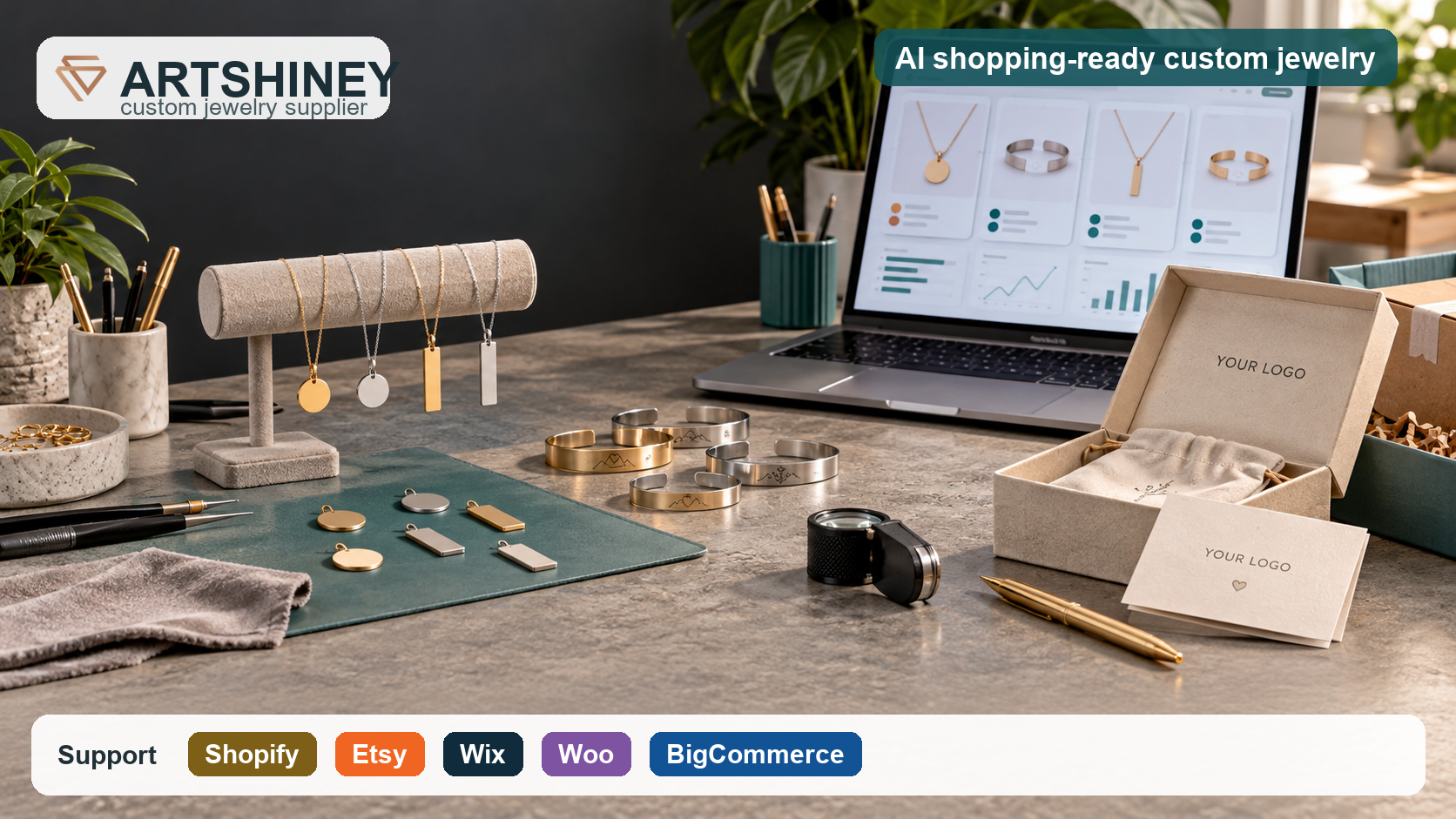

AI shopping is changing how customers discover products, compare options, and decide which store feels trustworthy. For custom jewelry sellers, that shift matters because a necklace, bracelet, ring, or charm is rarely judged by style alone. Shoppers also need confidence in personalization accuracy, material expectations, delivery timing, packaging, and whether the final piece will match the photo they saw online.
That is why the current search opportunity around custom jewelry is not just another keyword trend. It is an operating signal. Sellers who want to win on Shopify, WooCommerce, Wix, BigCommerce, and Etsy need product pages that are clear enough for humans, structured enough for AI shopping surfaces, and reliable enough to protect reviews after the order ships. A partner like Artshiney can help merchants connect product sourcing, personalization, brand packaging, and fulfillment into one more consistent workflow.
Why custom jewelry is a stronger AI-shopping topic right now
In a fresh United States Google Trends check for the past month, “custom jewelry” was far stronger than broader terms such as “personalized jewelry,” “handmade jewelry,” “jewelry dropshipping,” and “print on demand jewelry.” Search results also show a growing conversation around Google AI Mode, Gemini shopping, Shopify agentic storefronts, and Etsy items becoming easier to discover inside AI-powered shopping experiences.
The practical takeaway for merchants is simple: the winning custom jewelry listing has to explain more than the design. AI-assisted shoppers may compare products by material, personalization method, delivery promise, return policy, reviews, gift readiness, and brand credibility. If your catalog is vague, inconsistent, or visually generic, the store may lose before the shopper ever reaches checkout.
AI shopping rewards clear product data, not generic jewelry pages
Custom jewelry creates data complexity. A plain pendant may have metal color, chain length, plating, engraving area, font choice, name length, charm count, birthstone option, packaging option, and processing time. When those details are scattered across images, dropdowns, and vague descriptions, both shoppers and AI systems have a harder time understanding the offer.
Merchants should build each listing around a product data checklist:
- Base product type, such as necklace, bracelet, ring, charm, earring, or jewelry set.
- Personalization method, such as engraving, printed insert, nameplate, photo projection, birthstone selection, or charm assembly.
- Material and finish expectations, including stainless steel, sterling silver, alloy, plating color, enamel, acrylic, pearl, crystal, or stone-look components where applicable.
- Production limits, including name length, artwork requirements, font availability, photo quality, charm count, and size tolerance.
- Fulfillment details, including processing time, packaging options, tracking expectations, and the customer’s post-purchase communication flow.
This is where Artshiney’s product catalog is useful for merchants planning a custom jewelry line. Instead of starting from a blank page, sellers can review customizable products, compare categories, and build listing templates around the actual product attributes that need to be explained.
Product photos need to prove personalization, not just decorate the page
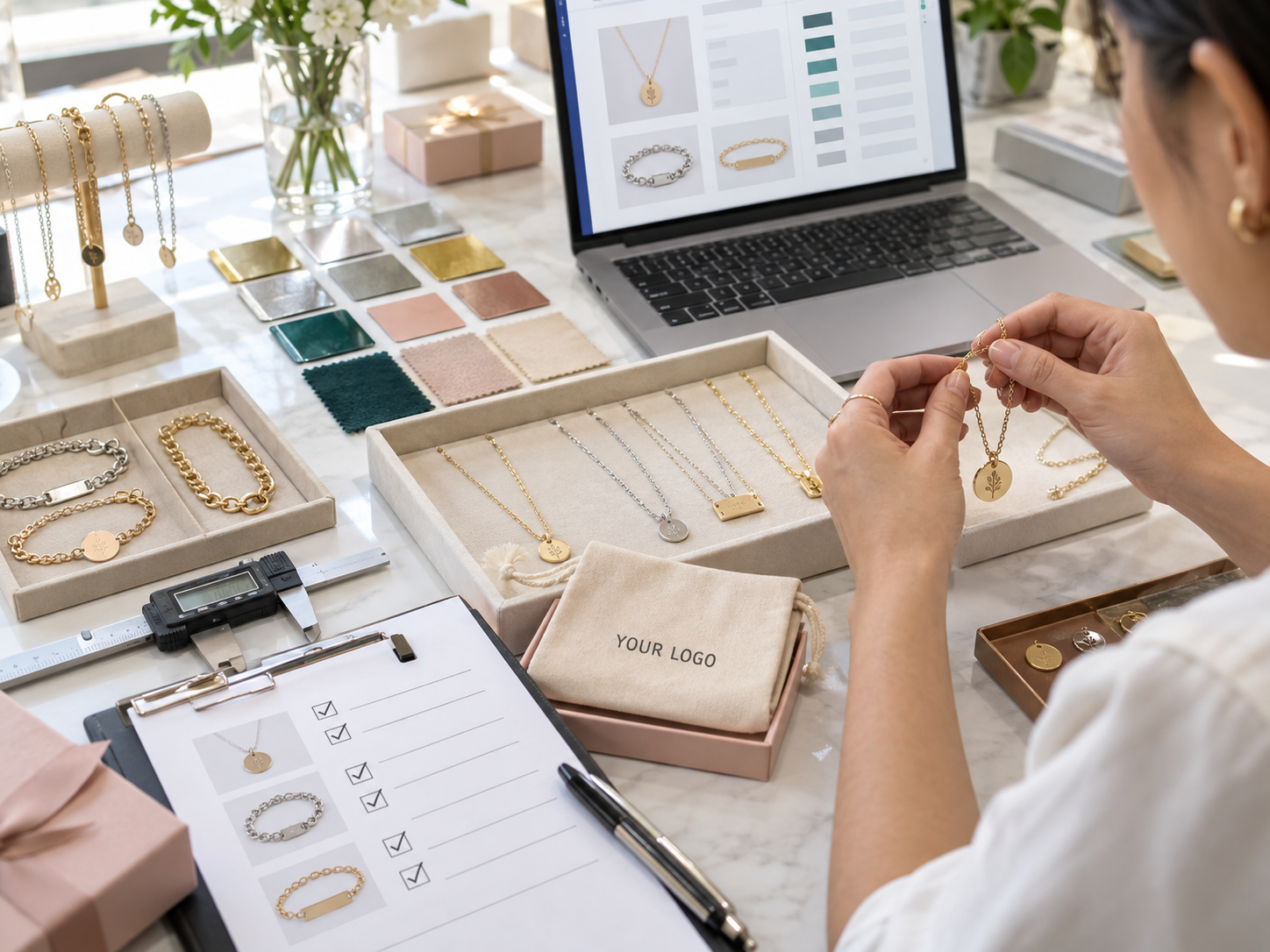
For custom jewelry, the first photo attracts attention, but the supporting images reduce uncertainty. A seller should show the final product, a close-up of the personalization area, scale on body or hand, packaging, material finish, and a clear gift-ready view. The goal is not to make every image look expensive. The goal is to make the product feel believable enough for a shopper to commit to a personalized order.
AI shopping surfaces also create a new risk: if every store uses the same supplier-style image, the product becomes easier to compare by price alone. Sellers can reduce that risk by using consistent photography rules across the catalog: similar lighting, clean backgrounds, realistic scale, honest close-ups, and packaging that matches the brand promise.
What merchants should evaluate before launching AI-ready custom jewelry
| Decision area | Why it affects conversion | Operational risk to control |
|---|---|---|
| Product selection | AI-assisted shoppers compare similar products quickly, so the assortment needs a clear reason to exist. | A catalog full of generic items can create price pressure and weak brand recall. |
| Personalization rules | Clear limits make the buyer feel safer when submitting names, dates, photos, or artwork. | Unclear rules cause rework, production delays, cancellation requests, and poor reviews. |
| Material expectation | Specific descriptions reduce disappointment when customers compare finish, weight, and durability. | Overclaiming materials or finish can increase disputes and refund pressure. |
| Brand packaging | Gift-ready presentation improves perceived value, review photos, and repeat purchase intent. | Inconsistent packaging weakens private-label trust and makes the order feel like a commodity. |
| Fulfillment promise | Processing and tracking clarity helps buyers choose the right product for birthdays, holidays, and events. | A vague delivery promise can turn a beautiful custom order into a support problem. |
Use product discovery to avoid launching another lookalike store
Many sellers enter jewelry dropshipping by copying visible winners. That can work briefly, but it creates a weak moat. The better path is to combine search demand with a sharper product logic: one personalization format, one gifting occasion, one audience, one material promise, or one repeatable collection system.
For example, instead of launching “custom necklaces” as a broad category, a merchant could build a collection around bridesmaid initials, pet memorial charms, family birthstone bracelets, minimalist nameplates for office wear, or faith-inspired engravable pendants. Each angle changes the photo plan, packaging language, upsell structure, and review prompts.
Artshiney’s jewelry product discovery tools give sellers a more practical starting point for this work. The point is not only to find something attractive; it is to identify products that can support a believable store promise, repeatable customization, and reliable fulfillment.
Private-label packaging turns AI discovery into brand memory
AI shopping may compress the discovery journey, but it does not eliminate the need for brand memory. Once the package arrives, the customer sees the jewelry box, pouch, insert card, thank-you card, label, and return or care instructions. Those touchpoints decide whether the order feels like a marketplace impulse buy or a real brand experience.
For merchants selling custom jewelry, packaging should do three jobs:
- Protect the piece so the chain, charm, stone, or engraved surface arrives in good condition.
- Explain care, personalization value, and brand tone without overwhelming the customer.
- Encourage review photos, repeat orders, and gift referrals.
Sellers who want a more defensible private-label experience can review Artshiney brand services for options such as brand-facing packaging and merchant presentation support. The merchant brand should be on the customer-facing packaging; Artshiney branding belongs in supplier, platform, and publisher contexts, not on the seller’s private-label jewelry box.
Quality control is a conversion feature
Quality control is often described as a back-office task, but in custom jewelry it is part of the offer. A customer buying a personalized bracelet is not only buying metal and engraving. They are trusting the seller to spell the name correctly, align the design, match the requested color, package the order carefully, and ship it in time for a meaningful moment.
A reliable custom jewelry workflow should check:
- Artwork and text input before production.
- Material, finish, chain length, charm count, and size choice before packing.
- Personalization placement and legibility under realistic lighting.
- Packaging match, including gift box, pouch, insert, and label selection.
- Tracking and support information before the customer asks for it.
This is one reason sellers should think about Artshiney’s seller FAQ before launch. The FAQ mindset helps merchants turn production realities into clear customer promises instead of vague copy that creates avoidable support tickets.
How Shopify, Etsy, WooCommerce, Wix, and BigCommerce sellers should adapt
Shopify sellers
Shopify merchants should prioritize product data completeness, collection architecture, policies, and a clean product media sequence. AI shopping and product feeds make the details matter. A custom jewelry seller should avoid relying on one hero photo and a short emotional description. The listing needs concrete information that can survive comparison.
Etsy sellers
Artshiney supports Etsy sellers, but merchants should not assume every supplier has a direct Etsy app integration unless that has been verified for their workflow. Etsy sellers should be especially careful with handmade language, personalization accuracy, processing time, and photo honesty. The store has to stand out without making claims that could disappoint buyers or conflict with marketplace expectations.
WooCommerce, Wix, and BigCommerce sellers
Independent-store sellers have more control over page structure, branding, and merchandising, but they also carry more responsibility for trust. Clear shipping pages, size guides, care instructions, return rules, reviews, and consistent image style matter because the shopper may not have a marketplace trust layer to lean on.
A practical launch sequence for AI-ready custom jewelry
- Choose one custom jewelry angle with clear buyer intent, such as gift-ready name bracelets or minimalist engraved necklaces.
- Select products from Artshiney’s product catalog that match the audience, price range, and fulfillment promise.
- Define personalization rules before writing ad copy or marketplace listings.
- Create a photo checklist: hero image, scale image, personalization close-up, packaging image, material detail, and care or gift context.
- Use Artshiney brand services to plan packaging that supports review photos and repeat purchases.
- Write product descriptions with specific materials, options, limits, and processing expectations.
- Test sample orders and inspect the unboxing experience before scaling ads.
- Review support questions weekly and turn repeated questions into better page content.
FAQ
Is custom jewelry still a good opportunity for ecommerce sellers?
Yes, but the opportunity is strongest when the seller avoids generic listings. Custom jewelry works best when the product, personalization method, packaging, and fulfillment promise are specific enough to earn trust before checkout.
What should custom jewelry sellers prepare for AI shopping?
Sellers should prepare complete product attributes, honest material descriptions, clear personalization rules, realistic product photos, shipping and return policies, and structured FAQ content. These details help both customers and AI-assisted shopping systems understand the offer.
Can Etsy sellers use Artshiney?
Artshiney supports Etsy sellers, but sellers should verify their exact workflow before assuming direct app integration. The safer operating language is that Artshiney can support Etsy seller operations through product sourcing, customization, brand services, and fulfillment planning.
Why does packaging matter for custom jewelry conversion?
Packaging affects perceived value after the purchase. A custom necklace or bracelet often arrives as a gift, so the box, pouch, insert, and thank-you card influence reviews, photos, referrals, and repeat orders.
How can a seller start without holding inventory?
A seller can start by choosing a focused product angle, validating demand, preparing listing content, testing samples, and working with Artshiney as a custom jewelry supplier for customizable products and fulfillment support.
Final takeaway
The next stage of custom jewelry selling will reward stores that are specific, trustworthy, and operationally consistent. AI shopping may help buyers discover products faster, but it also exposes weak listings faster. Merchants who define personalization rules, show realistic product photos, control packaging, and build a dependable fulfillment workflow will have a stronger chance of turning search demand into repeat customers.
To build a custom jewelry line with product sourcing, brand presentation, and fulfillment in one workflow, start with Artshiney today.