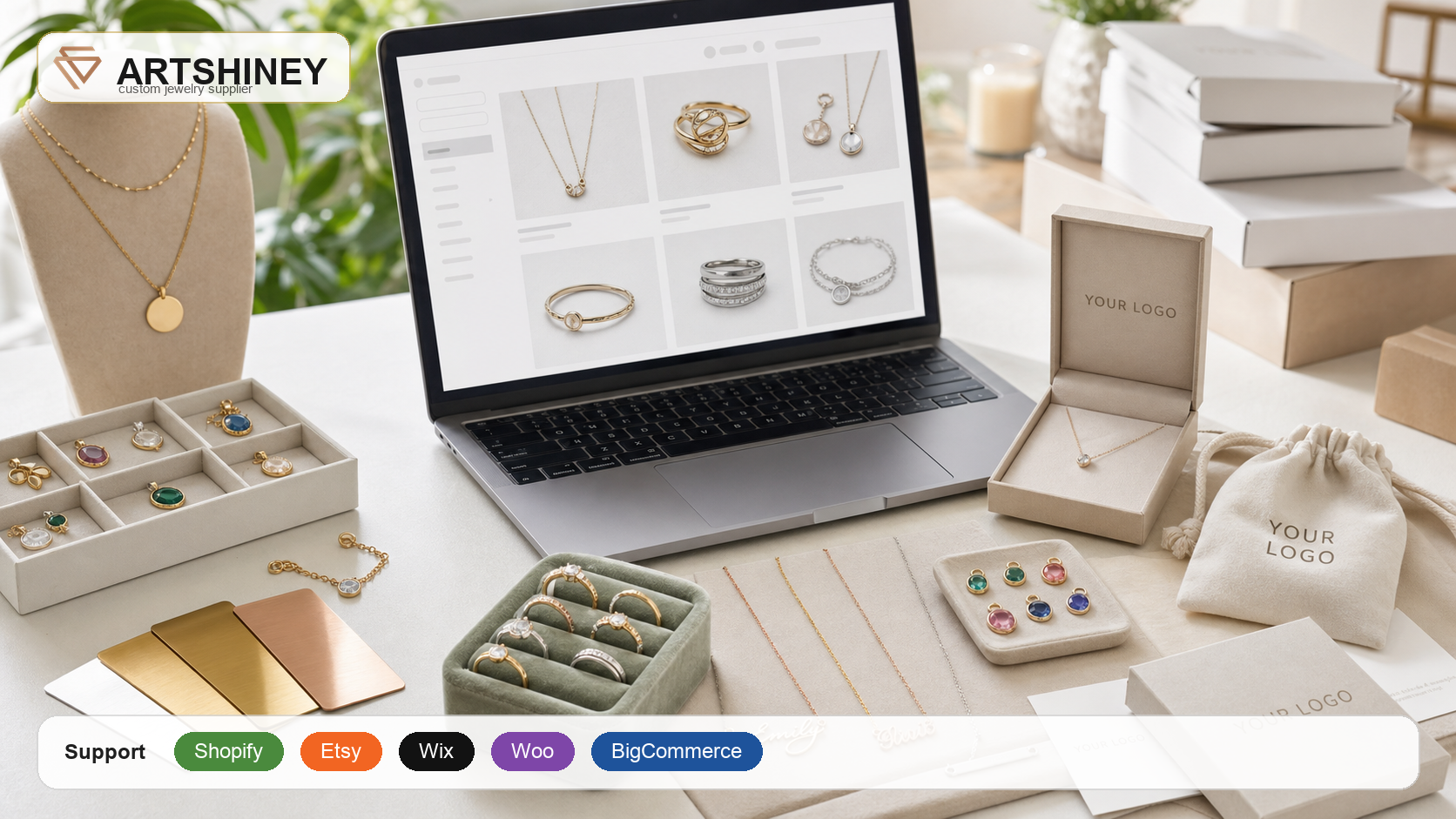

Custom Jewelry Supplier Guide for Etsy and Shopify Sellers
Custom jewelry demand is useful only when a seller can turn that demand into repeatable products, accurate personalization, reliable packaging, and clean fulfillment. A Google Trends check for the United States on June 21, 2026 showed custom jewelry carrying stronger relative search interest than several nearby Artshiney business keywords, including personalized jewelry and handmade jewelry. That does not mean every custom jewelry item is worth launching. It means merchants need a sourcing system that can protect product quality as demand moves across name necklaces, birthstone pieces, charm bracelets, rings, and private-label gift collections.
For Shopify, WooCommerce, Wix, BigCommerce, and Etsy sellers, the practical question is not just “what is trending?” The better question is: can your supplier help you test a custom jewelry concept, keep materials and finishes consistent, package the order under your store identity, and ship it without creating review risk? Artshiney is built around that merchant problem: sellers need product access, customization options, brand services, and fulfillment support in one operating flow.
Why Custom Jewelry Search Demand Matters for Merchants
Custom jewelry attracts intent-rich shoppers because the product is attached to a person, date, name, birth month, gift moment, or style identity. That can improve conversion because the buyer is not comparing only metal weight or lowest price. They are comparing emotional fit, gift readiness, delivery confidence, and whether the finished item looks personal enough to justify the purchase.
But custom jewelry also raises the cost of mistakes. A wrong name, inconsistent stone color, weak plating description, unclear production time, or damaged gift box can quickly become a refund, replacement, or public review. Sellers who want to use the custom jewelry trend should evaluate suppliers through an operations lens, not only a catalog lens. Artshiney’s product catalog gives merchants a starting point for comparing product types, while the final store decision should still account for audience, margin, fulfillment promises, and brand positioning.
Choose Products by Operational Fit, Not Just Search Volume
A name necklace may look like an obvious launch because personalized names have strong buyer intent. A charm bracelet may be better for repeat purchase because shoppers can add seasonal charms, birthstones, or matching gifts. A ring stack may lift average order value if the store can present coordinated sets. The right product depends on how well it fits your store’s merchandising and fulfillment model.
| Product angle | Merchant opportunity | Supplier risk to check | Best fit |
|---|---|---|---|
| Name necklaces | High gift intent and strong personalization story | Spelling accuracy, chain length, font clarity, production time | Shopify and Etsy sellers focused on personalized gifts |
| Birthstone jewelry | Easy monthly merchandising and family gifting | Stone color consistency and clear material expectations | Stores using seasonal calendars and email campaigns |
| Charm bracelets | Repeat purchase potential through add-ons and collections | Charm finish, bracelet sizing, attachment strength | Brand-led stores building a collectible product line |
| Private-label gift sets | Higher perceived value through packaging and presentation | Box fit, insert accuracy, pouch quality, shipment protection | Sellers competing on brand experience, not only price |
Merchants can use Artshiney’s jewelry product discovery tools to shortlist product ideas, then narrow those ideas with store-specific filters: expected retail price, personalization complexity, packaging needs, ad creative potential, and the likelihood of repeat orders.
Material and Craft Expectations Should Be Clear Before Launch
Custom jewelry buyers often read product pages carefully because the item is personal. Sellers should make material language easy to understand: base metal, plating color, stone style, chain length, pendant size, personalization limits, and care instructions. Avoid vague claims such as “best quality” unless the product page explains what quality means in practical terms.
A supplier relationship should help merchants keep those expectations consistent across listings. If a necklace, bracelet, and ring all use different finish language, buyers may assume the store is less professional. If product photos show a thicker chain than the shipped item, reviews can suffer. Artshiney as a custom jewelry supplier can support sellers who need a wider jewelry assortment while keeping store pages organized around clear product expectations.
Private-Label Packaging Changes the Buyer Experience
For many custom jewelry stores, packaging is not decoration. It is part of the conversion promise. A gift box, pouch, insert card, and thank-you card can make a personalized necklace feel ready to give, reduce buyer anxiety, and increase the chance that the customer remembers the store name after the first order. That matters for repeat purchase and referral behavior.
The key is to keep the merchant’s brand separate from the supplier’s role. Custom packaging should carry the seller’s identity, not the supplier’s logo. With Artshiney brand services, sellers can think through boxes, cards, pouches, labels, and other brand touchpoints that support a private-label jewelry experience. The goal is simple: the customer should remember the store they bought from, while the seller still benefits from a supplier workflow behind the scenes.
Quality Control Is the Hidden Conversion Lever
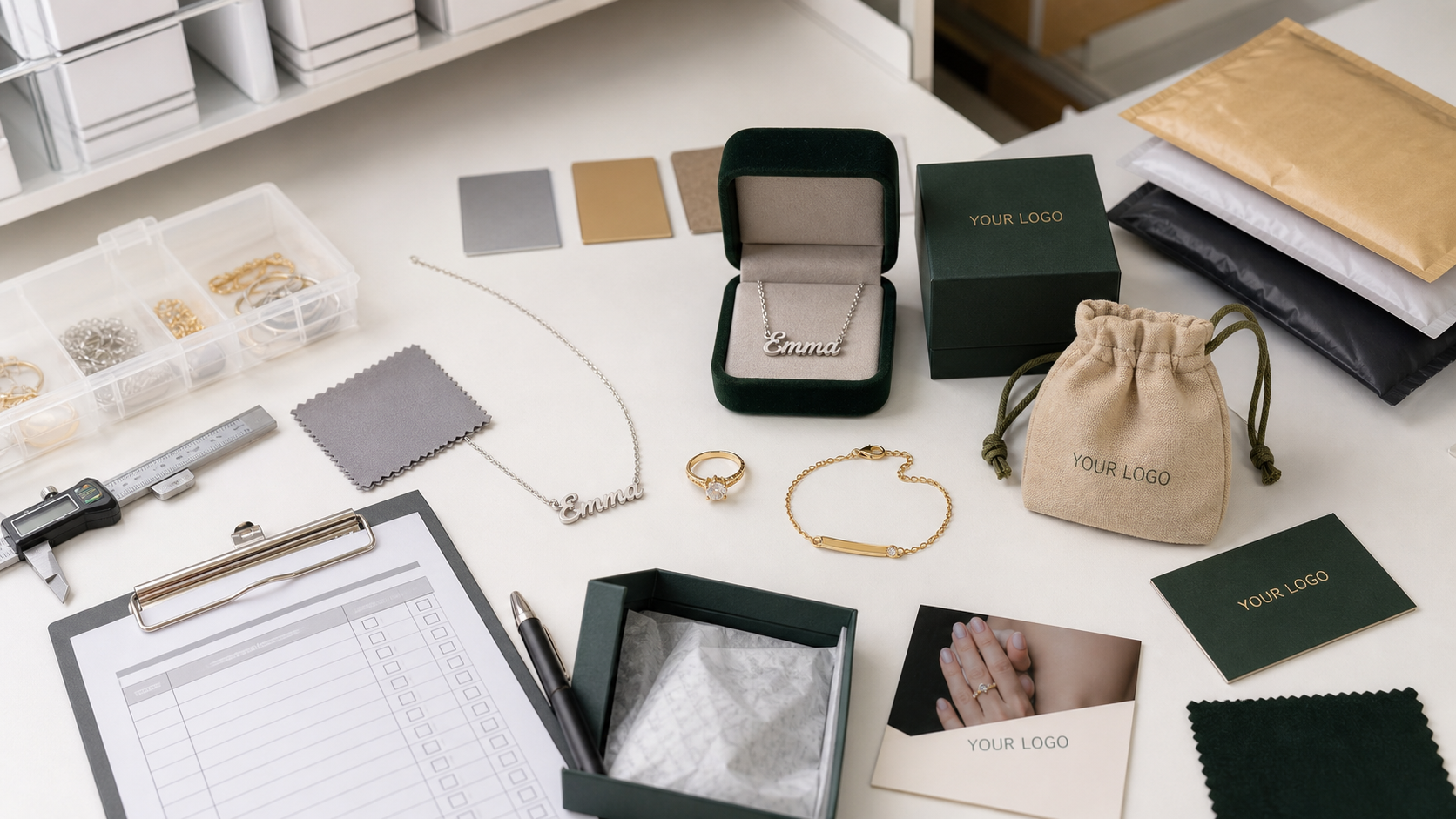
Advertising can bring traffic, but quality control protects the account after the order. For custom jewelry, sellers should build a simple pre-shipment checklist. Confirm the spelling or initials, inspect plating and stone placement, check clasp function, verify chain length, match the order to the correct packaging, and protect the gift presentation during shipment.
This checklist also affects customer service. When a seller can explain production time, personalization rules, and packaging expectations before purchase, fewer buyers feel surprised. When a seller has consistent product photos and clear descriptions, support conversations become easier. When fulfillment stays consistent, reviews are more likely to mention gift readiness, appearance, and trust instead of confusion or delays.
How Platform Sellers Should Think Differently
Shopify sellers
Shopify sellers usually have more control over brand presentation, landing pages, email flows, bundles, and post-purchase offers. A custom jewelry supplier should support enough product depth for collections, gift guides, and upsells. Shopify stores should also plan product pages around personalization fields, production time, and packaging photos.
Etsy sellers
Etsy sellers compete in a marketplace where shoppers compare many handmade and personalized listings side by side. Unless a direct Etsy app integration has been verified, it is more accurate to say that a supplier supports Etsy sellers rather than claiming an Etsy app connection. Etsy-focused merchants should pay close attention to personalization instructions, shipping promises, review language, and whether product photography feels handcrafted and giftable.
WooCommerce, Wix, and BigCommerce sellers
These sellers often need flexibility across site design, product content, and fulfillment operations. The supplier decision should account for how product information, images, packaging options, and order handling will fit the seller’s existing workflow. If the store owner has fewer apps or less automation, supplier clarity becomes even more important.
A Practical Supplier Checklist Before You Scale Ads
- Product consistency: Are metal color, stone appearance, sizing, and engraving or name-cut quality repeatable across orders?
- Personalization rules: Are character limits, fonts, placement, and production timing clear enough for product pages?
- Packaging fit: Does the jewelry arrive in a box, pouch, or insert that supports the seller’s brand promise?
- Fulfillment visibility: Can the seller set realistic delivery expectations before running paid traffic?
- Review protection: Are QC steps strong enough to reduce preventable complaints about spelling, finish, missing parts, or damaged presentation?
- Catalog growth: Can the supplier support related products so the store can build collections instead of one-off listings?
If a seller is unsure where to begin, Artshiney’s seller FAQ is a useful place to review common platform, order, and service questions before building a custom jewelry launch plan.
FAQ: Custom Jewelry Supplier Decisions
What is the best custom jewelry product for a new seller?
The best first product is usually one with clear personalization rules, strong gift intent, and low explanation burden. Name necklaces, birthstone necklaces, simple bracelets, and curated gift sets can work well when the seller has clear photos, material descriptions, and fulfillment timing.
Should Etsy sellers use the same supplier strategy as Shopify sellers?
No. Etsy sellers need marketplace-ready listing clarity, personalization instructions, and review protection. Shopify sellers usually need stronger brand storytelling, landing pages, email flows, and collection planning. Both groups benefit from supplier consistency, but the execution differs.
How does private-label packaging improve conversion?
Private-label packaging helps a personalized jewelry order feel more gift-ready and brand-owned. It can support higher perceived value, stronger post-purchase memory, and better customer trust, especially when boxes, pouches, cards, and inserts match the store identity.
Can custom jewelry work for dropshipping?
Yes, but only when production time, personalization accuracy, packaging, and shipping expectations are managed carefully. Custom jewelry dropshipping should be treated as a controlled fulfillment workflow, not a generic product upload strategy.
How should sellers avoid overpromising on materials?
Use specific, verifiable product language. Describe base metal, plating color, stone style, size, chain length, and care guidance. Avoid absolute claims that are not supported by product documentation.
Build a Custom Jewelry Line With Supplier Discipline
Custom jewelry can bring strong search intent and emotional buying behavior, but it rewards sellers who operate carefully. The merchants most likely to benefit are the ones who connect trend research with product selection, material clarity, private-label packaging, quality control, fulfillment expectations, and customer service. If you want to test custom jewelry with a supplier built for ecommerce merchants, you can start with Artshiney today and build a product line around both demand and operational consistency.