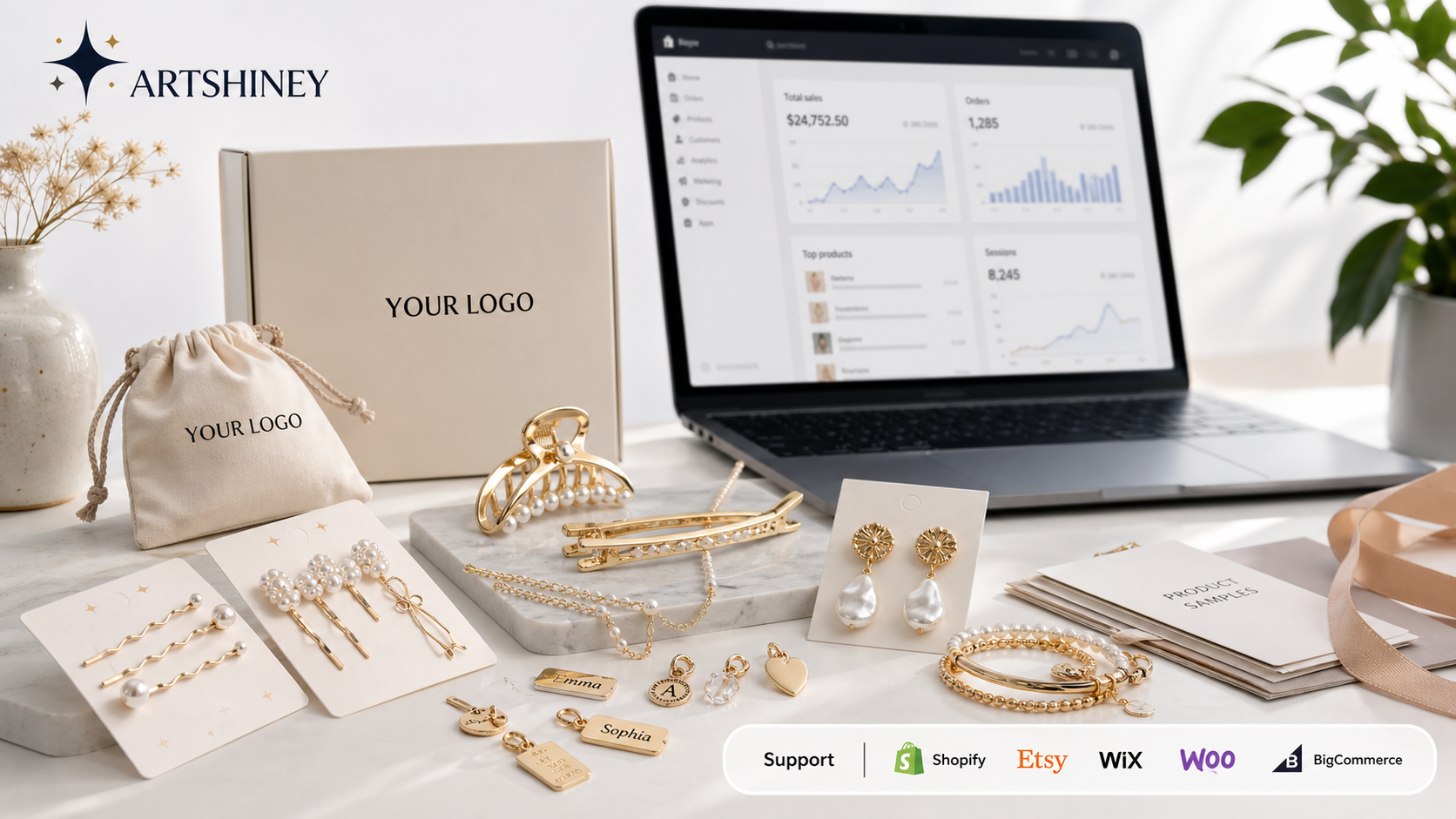

Hair Jewelry Search Demand: A Seller Guide for Custom Jewelry Stores
Hair jewelry is a useful signal for ecommerce jewelry sellers because it shows how customers are styling accessories in 2026: close to the face, visible in social photos, easy to layer, and expressive enough to feel personal. A current search-context review found that Google has called out hair jewelry at an all-time high, with gold hair clips and hair tinsel appearing as related searches. At the same time, July 2026 jewelry trend coverage is still pointing toward statement earrings, beads, pearls, charms, sculptural metal, and playful summer accessories.
For merchants, the opportunity is not simply to copy one viral product. The better opportunity is to build an accessory system around the same consumer behavior. Customers are looking for visible detail, giftable styling, personalization, and a sense that the piece belongs to a curated look. Shopify, WooCommerce, Wix, BigCommerce, and Etsy sellers can use this demand to test statement earrings, pearl accents, charm add-ons, bracelet stacks, name details, and private-label packaging without carrying a large inventory position.
This is where Artshiney can support the planning process for ecommerce jewelry merchants. Artshiney offers custom jewelry service, DIY and ready-made jewelry options, packaging customization, production and inspection, dropshipping, and fulfillment support. The merchant still owns the positioning, product page, brand voice, and customer relationship. The supplier workflow should help the store make the trend repeatable.
Why Hair Jewelry Demand Matters Beyond Hair Accessories
Hair jewelry demand is a styling signal. It tells sellers that customers want accessories that show up clearly in photos, connect to outfits, and feel more intentional than a basic everyday item. That can influence a jewelry store even if the first launch is not a dedicated hair accessory collection.
A seller can translate the signal into products that sit near the same buying intent: pearl drop earrings for summer hair-up styling, charm necklaces that echo the personalized feel of hair pins, gold clips paired with matching bracelets, or gift sets that combine earrings with a small charm. The goal is to build an offer that lets customers complete a look, not just buy one isolated product.
For a new or growing store, this also reduces risk. A narrow product can rise and fade quickly. A broader accessory system gives the merchant more ways to test demand, compare conversion rate, and reuse the same visual story across product pages, email, marketplace listings, and short-form content.
Turn a Trend Signal Into a Sellable Product Architecture
The first decision is collection structure. A trend-led launch should make it easy for customers to understand what each item does in the assortment. That is more useful than publishing a random mix of clips, earrings, bracelets, and charms with similar names.
| Collection role | Product direction | Merchant value | Operational watchpoint |
|---|---|---|---|
| Search-entry item | Pearl earrings, gold hair-inspired accents, simple charm necklace | Captures broad accessory demand and gives ads or organic pages a clear hook | Keep titles specific enough to avoid competing only on price |
| Personalization item | Name tag, initial charm, birthstone detail, engraved card insert | Adds emotional value and improves giftability | Control spelling, character limits, preview rules, and production timing |
| Bundle item | Statement earrings plus bracelet, charm necklace plus pouch, pearl set | Raises average order value and helps customers complete the look | Photograph the bundle clearly so customers know what is included |
| Private-label item | Jewelry box, pouch, thank-you card, care card, insert card | Makes the order feel more branded and review-worthy | Use the merchant’s logo, not the supplier brand, on customer-facing packaging |
Merchants can browse Artshiney’s product catalog to evaluate which products fit the role of entry item, personalization item, or bundle item. The decision should be based on customer intent, photo clarity, material expectations, and fulfillment complexity, not only on what looks attractive in a supplier listing.
What Shopify, Etsy, WooCommerce, Wix, and BigCommerce Sellers Should Do Differently
The same trend does not behave the same way on every sales channel. Shopify and BigCommerce merchants often have more control over landing pages, bundles, email capture, and post-purchase flows. They can build a hair jewelry demand landing page that routes shoppers into statement earrings, personalized charms, and giftable sets. WooCommerce and Wix sellers may need clearer page structure and stronger photography because the store experience depends heavily on theme quality and product organization.
Etsy sellers face a different challenge. Etsy shoppers often compare many handmade or personalized listings side by side, so the title, first image, personalization promise, and review language carry more weight. Unless a direct Etsy app integration has been verified for a specific workflow, it is more accurate to say that Artshiney can support Etsy sellers with sourcing, production, packaging, and fulfillment planning. The seller still needs to manage marketplace rules, listing quality, customer messages, and delivery expectations.
If a merchant is testing multiple channels, Artshiney’s jewelry product discovery tools can help compare product options before committing to a full campaign. A smart test might use one statement earring style for Shopify ads, one personalized charm angle for Etsy search, and one bundled gift set for email or TikTok-driven traffic.
Material and Craft Expectations Need to Be Written Before Ads Run
Trend-driven customers are often excited by photos, but reviews are shaped by the physical details: weight, finish, clasp feel, pearl appearance, plating tone, comfort, packaging, and whether the product matches the product page. If the listing makes the piece look heavier, larger, or more premium than it is, the seller may get early clicks but weak reviews.
Before launching a campaign, merchants should define the material story in plain language. If a product uses stainless steel, 18K PVD gold plating, pearls, zircon accents, or other components, explain what the customer should expect without unsupported claims. Avoid absolute wording such as guaranteed allergy-free or certified safe unless the seller has documentation for the exact product and target market.
This is also where sampling matters. Order samples before scaling. Check the finish under natural light, the way pearl details photograph, the comfort of earrings, the durability of small charm connections, and the packaging fit. A trend product that arrives tangled, scratched, or poorly packed can turn a good search opportunity into refunds and negative comments.
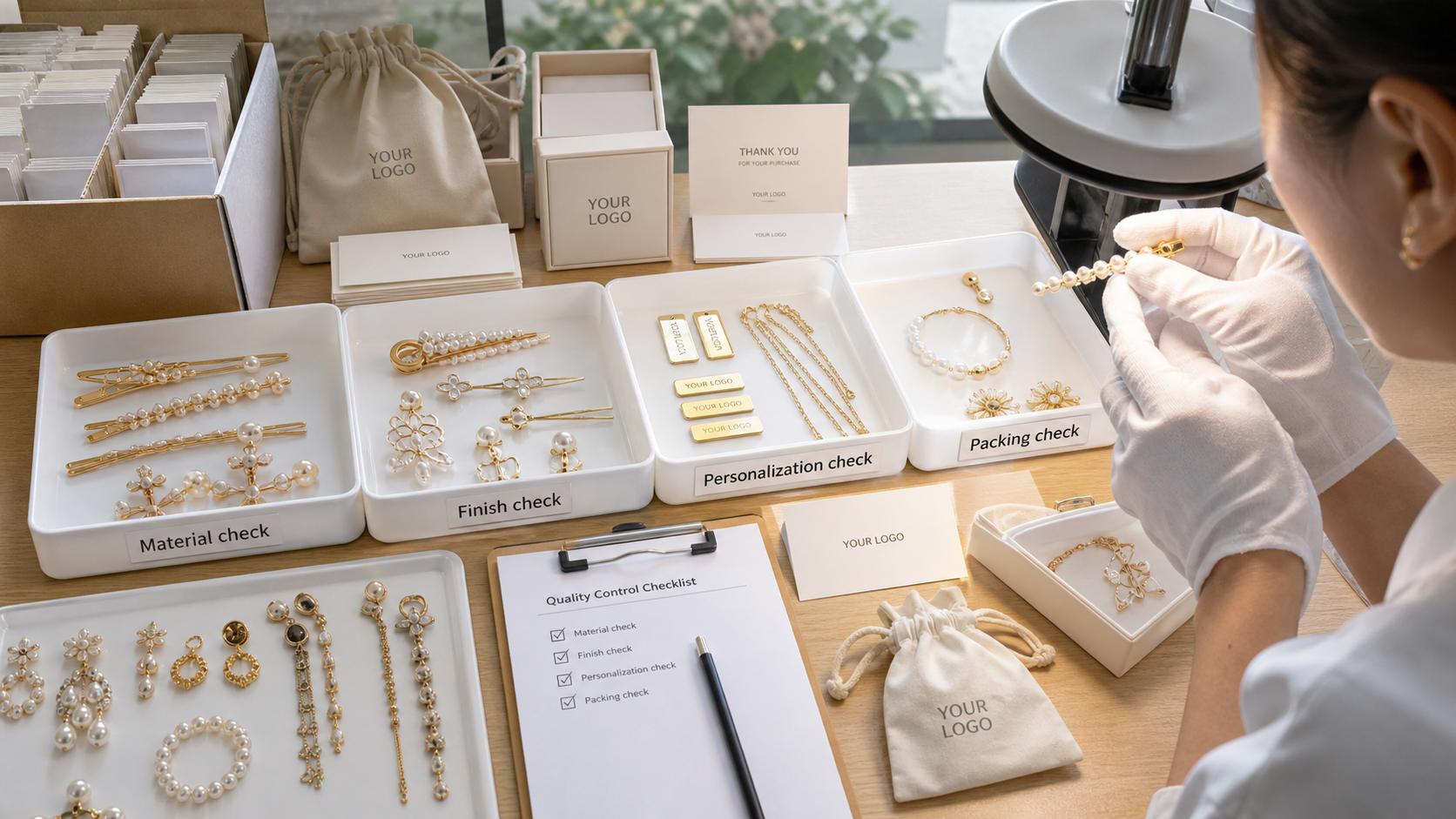
Quality Control Is Part of Conversion, Not Just Operations
Customers rarely see the supplier workflow, but they feel its results. Consistent color, secure stones, smooth edges, clean personalization, and neat packaging affect whether the customer posts a photo, leaves a review, or buys again. For trend-led accessories, small details matter because the product is often purchased for a visible styling moment.
A useful QC checklist for this category should include:
- Finish consistency across gold-tone or silver-tone pieces.
- Pearl, zircon, bead, or charm placement alignment.
- Comfort checks for earrings, clips, pins, and chain elements.
- Personalization accuracy for initials, names, dates, and insert cards.
- Packaging fit so delicate details do not shift during shipping.
- Photo-to-product consistency for product pages and marketplace listings.
Artshiney’s seller FAQ is a useful starting point for operational questions, but merchants should still create their own launch checklist. The checklist should match the actual promise on the product page: processing time, personalization rules, return policy, material description, and packaging options.
Private-Label Packaging Makes the Trend More Defensible
Hair jewelry search demand and statement accessories are visually strong, which makes packaging more important. A customer may buy because the product is trendy, but they remember the store when the unboxing feels organized, giftable, and clearly branded. That is especially true for small accessories, where the packaging can create perceived value without changing the product itself.
For this kind of collection, custom packaging can include a pouch, jewelry box, care card, thank-you card, and small insert card. The customer-facing items should carry the merchant’s private brand, not the supplier’s name. When planning with Artshiney brand services, sellers should prepare clean logo files, packaging copy, care instructions, and any seasonal message before the campaign starts.
Packaging should also help reduce support tickets. If the order includes a personalized charm, tell the customer how to check the spelling and what to do if something is wrong. If the product uses delicate pearl or chain details, include simple care guidance. If the item is part of a bundle, use an insert that shows what was included so the customer does not think a small component is missing.
Fulfillment Timing Can Protect Reviews and Repeat Purchases
Trend demand can create pressure to launch quickly, but fulfillment promises should stay realistic. Customers buying personalized jewelry, gift sets, or styling accessories often care about delivery timing because the product may be linked to a trip, birthday, event, or social moment. A late package can damage the review even when the product quality is good.
Sellers should separate production time from shipping time on product pages. They should also decide which products are safe for paid ads and which should remain organic tests until the supplier workflow is proven. A simple statement earring may be ready for faster testing than a heavily personalized set with several custom components.
Using Artshiney as a custom jewelry supplier can help merchants avoid holding inventory while they test demand, but no supplier removes the need for clear store policies. The merchant should still monitor first-order feedback, shipping questions, and repeat-purchase behavior before scaling spend.
How to Build a 30-Day Test Around This Trend
Week 1: Select and sample
Choose three to five products that support the same style story: one statement earring, one pearl or charm detail, one bracelet or necklace add-on, and one private-label packaging option. Order samples, photograph them together, and check the product page promise against the actual product.
Week 2: Build the product page system
Create titles and descriptions around customer use cases: summer updo styling, gift-ready pearl accessories, personalized charm sets, or statement earrings for event outfits. Add material notes, size details, processing time, care instructions, and packaging expectations.
Week 3: Test channel-specific hooks
On Shopify or BigCommerce, test a landing page and bundle offer. On Etsy, test more specific long-tail titles and first-image clarity. On WooCommerce or Wix, check mobile page speed and make sure options are not confusing. Use customer questions as copy feedback.
Week 4: Decide what to scale
Do not scale only by clicks. Compare add-to-cart rate, personalization errors, support messages, delivery questions, return reasons, and reviews. A slightly lower-click product with fewer operational issues can become the stronger long-term SKU.
FAQ
Is hair jewelry only a short-term trend?
It may be seasonal in search behavior, but the underlying customer intent is broader: visible styling, personalization, and accessories that complete a look. Sellers should treat it as a signal for product architecture, not as a reason to overstock one narrow item.
Can Etsy sellers use this strategy?
Yes. Etsy sellers can use the strategy by focusing on clear first images, personalization rules, handmade-style storytelling, and gift-ready packaging. Use accurate wording: Artshiney can support Etsy sellers, but do not claim a direct Etsy app integration unless that workflow has been verified.
What products pair well with hair jewelry demand?
Statement earrings, pearl earrings, charm necklaces, bracelets, initial tags, birthstone details, and private-label packaging can all fit the same customer mood. The best mix depends on the seller’s audience, price point, and fulfillment tolerance.
How many products should a merchant launch first?
Start with a tight test of three to five products plus one or two packaging options. That is enough to learn which story converts without creating too many photos, descriptions, and fulfillment paths at once.
What should sellers check before running ads?
Check sample quality, material descriptions, personalization rules, product photos, packaging fit, production timing, shipping expectations, and return policy. Ads should begin only after the seller understands the real customer experience.
Use the Trend to Build a Store Customers Remember
Hair jewelry search demand is valuable because it points to a larger shift: customers want accessories that feel personal, visible, and styled. Sellers who respond only with one trending item may get short traffic. Sellers who build a thoughtful assortment, write accurate product pages, control packaging, and monitor fulfillment can turn that demand into a stronger jewelry brand.
To plan your next custom jewelry and private-label accessory test, start with Artshiney today and build the collection around product fit, quality control, packaging, and repeat-purchase potential.