
Meta description: Use name necklace search demand to plan custom charms, packaging, QC, and fulfillment for Shopify, Etsy, and ecommerce jewelry sellers.
Name Necklace Search Demand: A Custom Jewelry Seller Guide
For July 2026 product planning, name necklaces deserve a closer look from ecommerce jewelry sellers. In a U.S. Google Trends comparison over the last 30 days, the query “name necklace” held stronger relative search interest than broader phrases such as “personalized jewelry” and “handmade jewelry,” while “custom jewelry” also remained a high-intent phrase. At the same time, the current jewelry SERP and fashion conversation are leaning into personal storytelling: charms, pearls, birthstones, mixed metals, and jewelry that feels collected rather than logo-heavy.
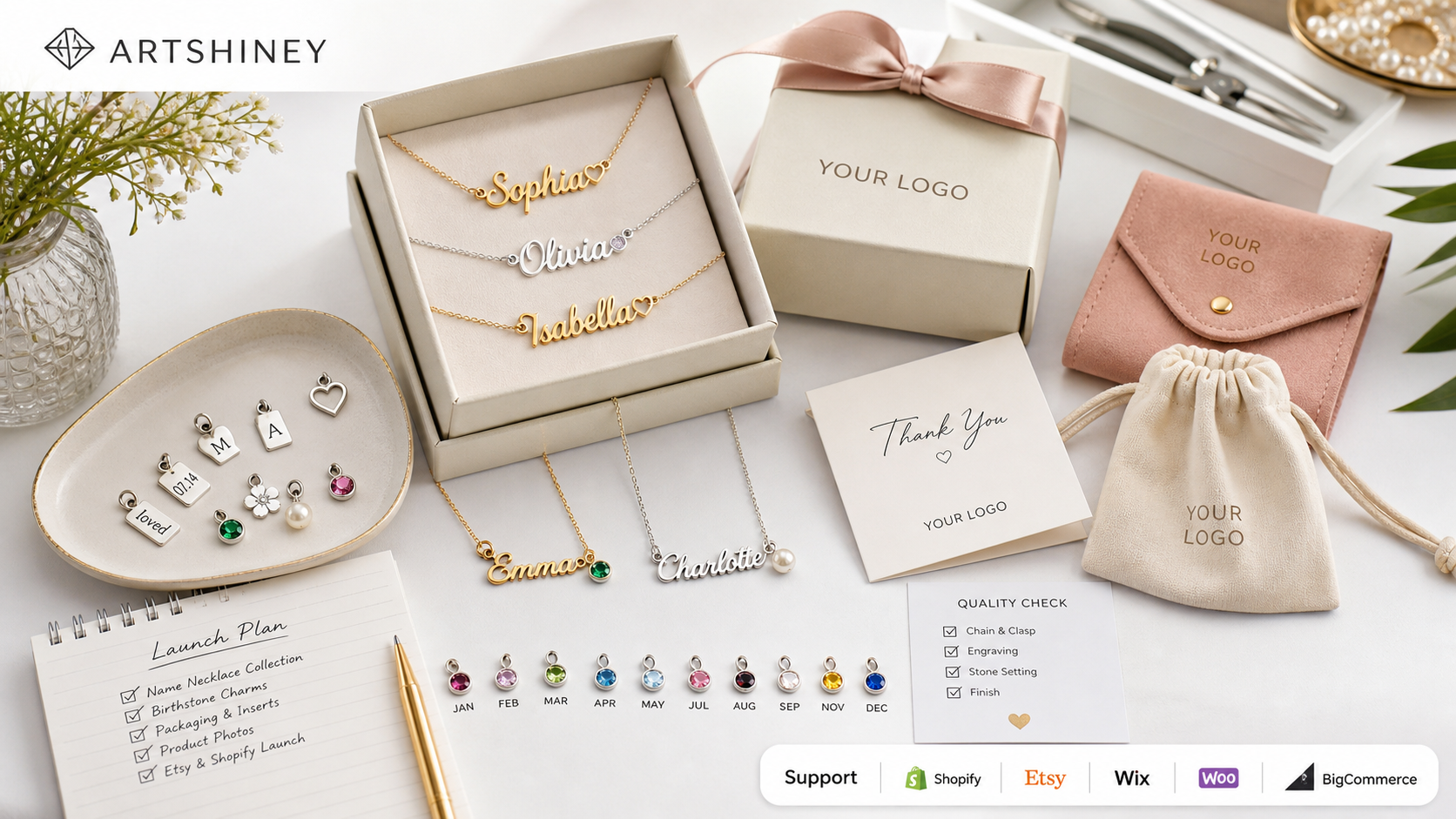
That creates a practical opportunity for Shopify, WooCommerce, Wix, BigCommerce, and Etsy sellers: do not treat name jewelry as a single product. Treat it as a configurable collection system. A seller can start with name necklaces, then expand into initial charms, birthstone drops, pearl details, bracelet add-ons, packaging upgrades, and repeat-purchase gift moments. Artshiney can support this type of custom jewelry planning when the store needs sourcing, personalization options, branding, and fulfillment to work together.
Why Name Necklace Demand Matters for Merchants
Name necklaces are not only a style keyword. They are a buying-intent keyword. A shopper searching for a name necklace is usually imagining a specific person, gift event, spelling, metal tone, or emotional story. That intent can support stronger conversion than generic “cute necklace” traffic, but it also raises the operational bar for the seller.
If the engraving is unclear, the spelling workflow is weak, the chain feels lighter than expected, or the gift packaging looks inconsistent with the listing photos, the same emotional intent that drives conversion can turn into a refund, a poor review, or a customer support ticket. This is why merchants should evaluate Artshiney’s product catalog with both style and operations in mind.
Turn One Name Necklace Into a Collection System
A strong custom jewelry collection gives customers meaningful choices without making the fulfillment workflow chaotic. The goal is controlled personalization: enough options to feel personal, but not so many that quality control becomes fragile.
| Collection Layer | Merchant Opportunity | Operational Risk to Control |
|---|---|---|
| Name necklace base | High-intent gift and self-purchase product with clear personalization value. | Spelling accuracy, font readability, chain length, plating expectations. |
| Initial or letter charms | Lower-friction add-ons for customers who want subtle personalization. | Consistent charm size, jump-ring strength, mixed-metal matching. |
| Birthstone charms | Birthday, family, bridesmaid, and anniversary bundles. | Stone color expectations, setting security, inventory mapping by month. |
| Pearl or symbolic charms | Trend-led storytelling without relying on heavy logos. | Surface finish, scale balance, product photos that show real proportions. |
| Private-label packaging | Higher perceived value, gifting readiness, better unboxing content. | Logo file quality, insert accuracy, box fit, shipping protection. |
Merchants can use Artshiney’s jewelry product discovery tools to compare product directions before committing ad budget to a narrow assortment. The best collection is not always the one with the most SKUs. It is the one that makes customization easy for the buyer and repeatable for the seller.
Product Selection: What to Check Before Launch
Material Expectations
Personalized jewelry listings should be clear about metal tone, plating, base material, finish, care expectations, and whether the look is suitable for everyday wear. Sellers should avoid vague claims that cannot be supported. Customers buying name jewelry often compare multiple listings quickly, so transparent material language can reduce pre-sale hesitation and post-sale disappointment.
Customization Workflow
Every personalized order needs a clean data path: customer spelling, character limits, font choice, stone month, chain length, packaging option, and shipping address. A seller should test the path from product page to fulfillment before scaling ads. If the store sells on Etsy, the safer language is that the supplier supports Etsy sellers and ecommerce operations; unless a direct Etsy app integration has been verified, merchants should not assume app-level automation.
Photography and Proportion
Name necklaces and charm jewelry need product photos that show scale. A close-up can sell detail, but a neck shot, hand shot, packaging shot, and measurement image help reduce returns. Sellers using Shopify or WooCommerce can often build richer landing pages, while Etsy sellers may need to make every image slot explain the personalization clearly.
Brand Packaging Can Raise Trust, But It Must Stay Consistent
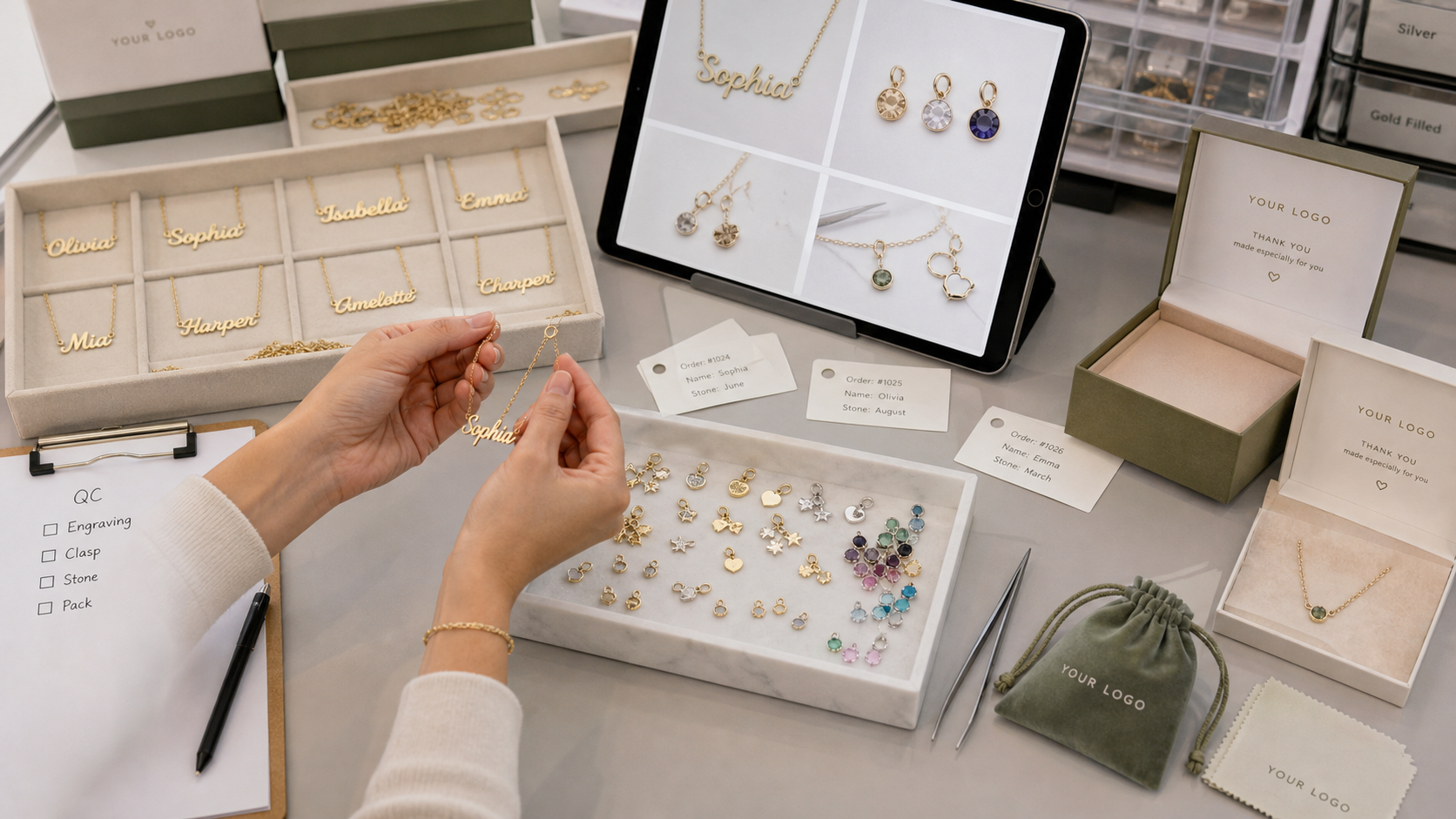
Personalized jewelry is often purchased as a gift. That means packaging is not just decoration; it is part of the product promise. A clean box, pouch, thank-you card, care card, or insert can make a lower-ticket item feel more considered. It can also help the customer remember the store name after the first purchase.
The risk is inconsistency. If the listing shows a premium box but the shipment arrives in a weak pouch, reviews can suffer. If the brand insert uses a low-resolution logo, the customer may question the entire store. Artshiney brand services are most useful when sellers treat packaging as a repeatable system: logo file, color direction, insert copy, jewelry box fit, and shipping protection should be decided before launch traffic increases.
Quality Control Points That Affect Reviews
For name necklaces and charm jewelry, small errors feel personal to the customer. A merchant should define quality control checkpoints before promoting the collection:
- Confirm the exact spelling, capitalization, character limit, and symbol request.
- Check engraving or cutout clarity under normal daylight, not only studio lights.
- Test clasp closure, jump rings, charm attachment, and chain movement.
- Compare the finished item with the metal tone and stone color shown in the listing.
- Match the packaging choice to the order note, gift message, and brand insert.
- Document edge cases, such as long names, double names, accents, and uncommon characters.
When sellers work with Artshiney as a custom jewelry supplier, the operational question should not be only “Can this be made?” It should be “Can this be made consistently when the store receives more orders, more spelling variations, and more gift deadlines?”
Platform Strategy: Shopify, Etsy, Wix, WooCommerce, and BigCommerce
Different selling channels need different product-page decisions. Shopify and BigCommerce sellers may focus on landing-page storytelling, bundles, email capture, and post-purchase upsells. WooCommerce sellers often need strong product option logic and clear order notes. Wix sellers may prioritize a simple visual catalog and clear gift positioning. Etsy sellers need keyword clarity, fast visual explanation, review trust, and customer messaging discipline.
The same supplier strategy can support all of these channels, but the store owner should adapt the listing experience. A Shopify store may sell a “family birthstone name necklace set,” while an Etsy listing may need a tighter title and image sequence around “personalized name necklace with birthstone charm.” Artshiney’s seller FAQ is a useful place to review operational questions before sellers build listings around custom products.
How to Build the First Launch Set
A merchant does not need to launch every personalized jewelry idea at once. A practical first set could include one core name necklace, two metal tones, one adjustable chain option, a small birthstone charm add-on, one pearl or heart charm option, and one private-label packaging upgrade. That gives the customer enough choice while keeping the seller’s product data, photos, and QC process manageable.
Before the first paid campaign, sellers should order samples, photograph the exact packaging experience, write care instructions, define production and fulfillment timing, and prepare customer service templates for spelling confirmations and order changes. This is the difference between using a trend and building a defensible custom jewelry offer.
FAQ
Are name necklaces still a good product for jewelry sellers?
Yes, when sellers treat them as personalized gift products rather than generic necklaces. Current search demand favors specific intent around names and customization, but the product still needs clear materials, accurate spelling, strong photos, and reliable fulfillment.
Should a store sell charms with name necklaces?
Charms can increase perceived personalization and repeat-purchase potential. Birthstones, initials, pearls, and symbolic charms let customers build a story around the base necklace, but sellers should limit options until the QC workflow is proven.
Can Etsy sellers use this strategy?
Yes. Artshiney can support Etsy sellers with custom jewelry sourcing and fulfillment planning, but sellers should describe this as supplier support unless they have verified a direct Etsy app integration for their own workflow.
What should sellers sample before launching?
Sample the name necklace, chain, clasp, charm attachment, stone color, engraving or cutout clarity, box or pouch, thank-you card, care insert, and shipping protection. Sample photography should match the final listing experience.
Plan a Custom Jewelry Collection With Artshiney
Name necklace demand is useful only if the seller can turn personalization into a reliable customer experience. The winning collection should connect product choice, materials, packaging, quality control, fulfillment timing, and review protection. If your store is ready to test name necklaces, charms, birthstones, or private-label packaging, start with Artshiney today and build a custom jewelry launch plan around products your customers can understand, trust, and gift with confidence.