
Name Necklace Supplier Guide for Shopify & Etsy Sellers
Custom name necklaces are not just another personalized jewelry SKU. For online sellers, they sit at the intersection of search demand, gift intent, brand trust, and fulfillment risk. A buyer may accept a small style variation on a generic chain, but they will not forgive a misspelled name, weak clasp, late gift order, or packaging that makes the product feel like a commodity.
That is why the supplier decision matters. A name necklace program needs product variety, personalization controls, material expectations, quality checks, branded packaging, and clear delivery promises. Artshiney gives jewelry sellers a practical way to build that system without holding deep inventory, while still keeping the customer experience connected to the seller’s own brand.
The opportunity is timely. Shopify’s current 2026 jewelry dropshipping guide frames jewelry as a no-inventory category where sellers still need supplier reliability and packaging differentiation. Etsy’s Spring and Summer 2026 seller guidance highlights detail-rich product imagery and expressive charm culture, while Etsy’s live 2026 jewelry marketplace surface includes monogram and name necklaces as shopper-facing categories. The search context points to the same lesson: personalized jewelry can attract attention, but only disciplined operations turn that attention into reviews and repeat purchases.
Why Name Necklaces Convert Differently From Generic Jewelry
A generic necklace is usually judged by style, price, and photography. A name necklace is judged by identity. The customer’s own name, a child’s name, a partner’s name, a pet name, initials, or a meaningful word becomes the product. That emotional layer can lift conversion rates, average order value, and gift-season demand, but it also raises the cost of mistakes.
For Shopify, WooCommerce, Wix, and BigCommerce stores, the main advantage is control. Sellers can build landing pages around name necklace gifts, zodiac or birth flower add-ons, bridesmaid gifting, Mother’s Day, graduation, and everyday self-purchase. For Etsy sellers, the advantage is search fit: shoppers already arrive with custom intent. The risk is that marketplace buyers compare many similar listings quickly, so product photos, processing time, spelling instructions, and review quality become decisive.
What To Evaluate Before Choosing a Name Necklace Supplier
A strong supplier is not only the factory that can make a name pendant. For merchants, the supplier should support the entire selling promise from product setup to after-delivery review. Artshiney’s product catalog shows ready-to-sell jewelry and customizable items, including name necklace products with material, color, and size variations. That range matters because one store may need a simple bestseller, while another needs a more segmented collection for gifts, birthdays, or premium packaging.
| Supplier factor | Why it affects sales | Merchant action |
|---|---|---|
| Personalization input | Spelling, character length, font, and metal color errors create refunds and negative reviews. | Use clear product-page instructions and confirm how the supplier receives custom text. |
| Material expectation | Buyers compare shine, weight, plating tone, and skin-comfort language before purchasing. | Describe materials conservatively and match photos to actual variants. |
| Production consistency | Name jewelry is inspected at pendant edges, clasp strength, chain finish, and spelling accuracy. | Order samples before scaling ads, then monitor reviews by variant. |
| Brand packaging | Unboxing can make a dropshipped order feel like a real jewelry brand. | Pair boxes, pouches, thank-you cards, and care inserts with your own brand voice. |
| Fulfillment promise | Personalized gifts are often date-sensitive, especially around holidays and weddings. | Publish realistic processing and shipping windows by destination. |
Product Strategy: Build a Collection, Not One Listing
Name necklaces work best when merchants think in collections instead of a single SKU. A basic script-name necklace can capture broad demand, but add-on categories create better merchandising: initials, birth flowers, birthday gifts, bridesmaid sets, family names, pet names, and minimalist everyday designs. Sellers can then match ad creatives and landing pages to buyer intent instead of forcing one product page to serve every audience.
Artshiney’s jewelry product discovery tools help merchants compare products before choosing which styles belong in a collection. For a new store, the safer path is usually three to six variants: a hero name necklace, one premium-looking option, one giftable set, and a few lower-friction initial or alphabet products. This gives the store enough variety for upsells without making operations too complex.
Shopify, WooCommerce, Wix, and BigCommerce Sellers
Independent-store sellers should focus on landing-page clarity. The product page needs name entry instructions, character limits, material choices, chain length, delivery expectations, packaging photos, and a return policy for personalized goods. A good product page also reduces customer support load by answering the questions buyers ask before they hesitate: Will the name fit? How long will production take? What does the packaging look like? Can this be sent as a gift?
Etsy Sellers
Etsy sellers should treat Artshiney as a supplier and fulfillment partner, not as a verified direct Etsy app integration unless that specific integration has been confirmed in their own account. The practical workflow is to keep Etsy listing copy, processing times, personalization fields, and customer messages accurate, then use the supplier process to fulfill the personalized order. Clear buyer communication matters because Etsy reviews often mention delivery speed, packaging, and whether the item matched the personalization request.
Brand Packaging Turns Name Jewelry Into a Store Asset
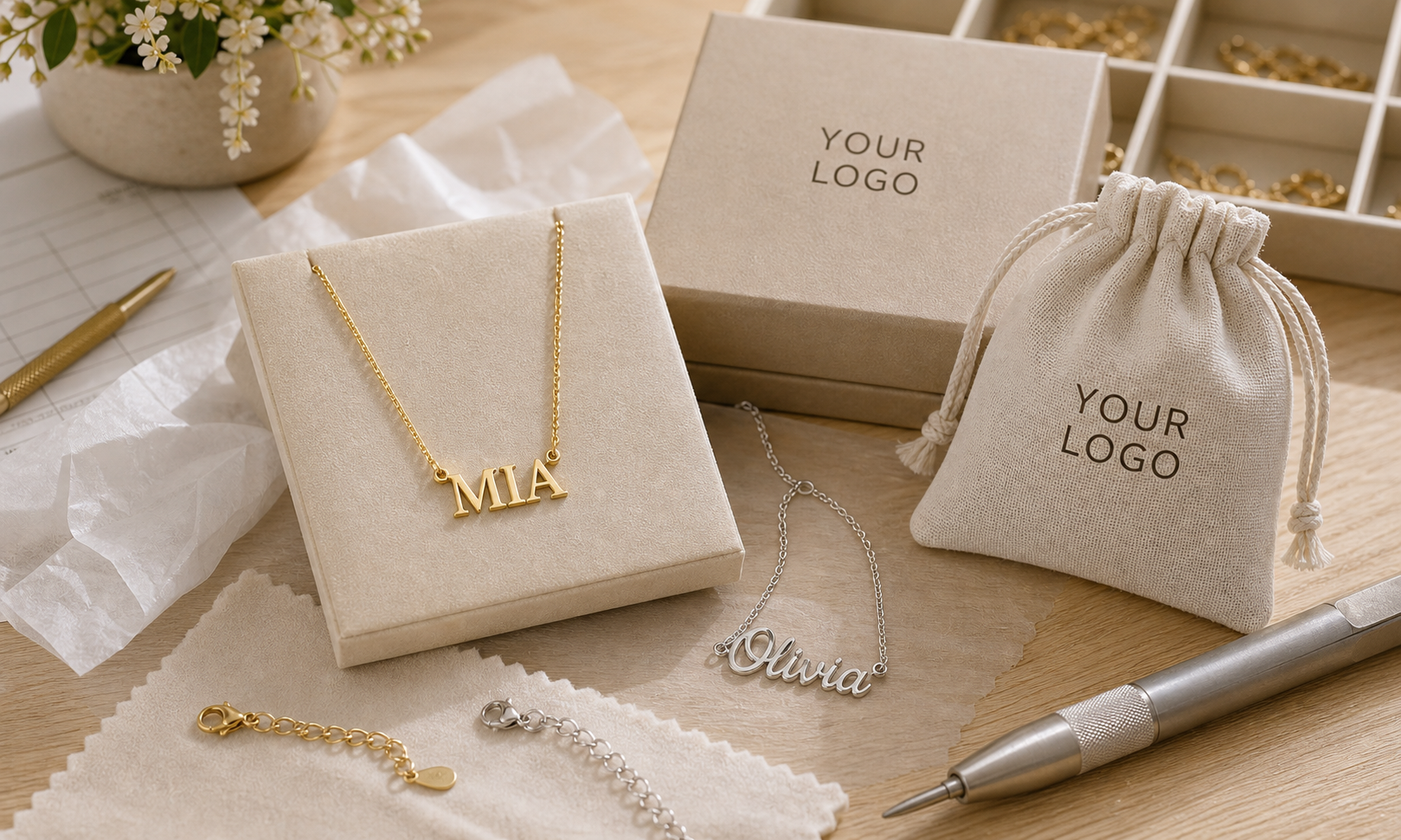
Personalized jewelry is giftable, which makes packaging more important than it is for many everyday accessories. A plain pouch can protect the item, but branded packaging can make the buyer remember the store. That affects reviews, social sharing, repeat purchase, and whether the recipient sees the seller as a real jewelry brand.
Artshiney brand services are relevant here because merchants can plan packaging around the customer experience: jewelry boxes, pouches, care cloths, thank-you inserts, and other branded touchpoints. The brand name on those assets should be the merchant’s brand, not the supplier’s brand. The goal is for the customer to feel that the seller curated, produced, and delivered a coherent gift experience.
Quality Control: The Small Details That Protect Reviews
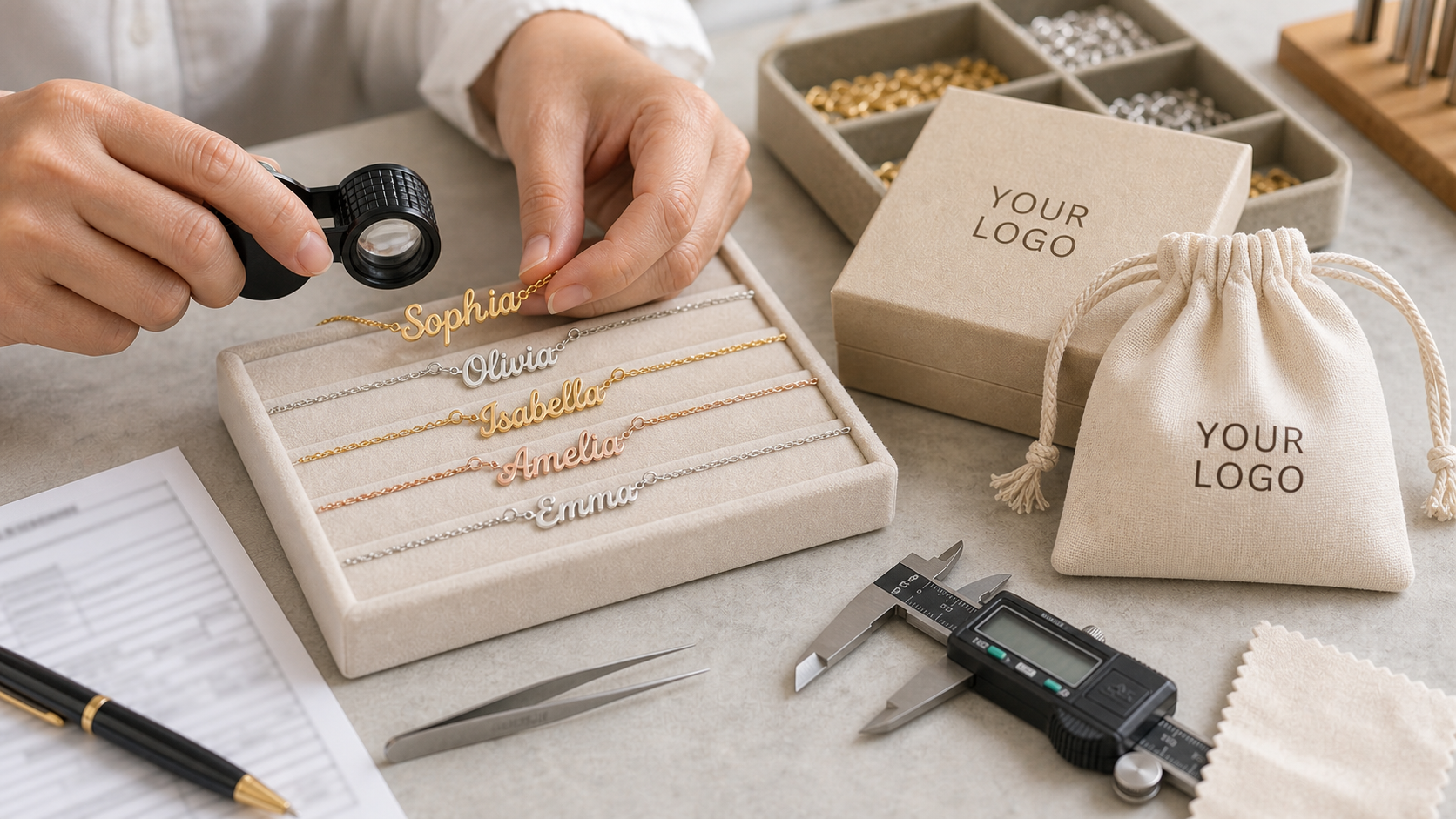
Name necklaces have predictable quality-control checkpoints. The first is spelling. The second is the pendant finish: sharp edges, weak joins, uneven plating tone, or thin-looking letters can make the product feel cheap. The third is chain and clasp durability. The fourth is packaging accuracy, especially when a seller offers gift notes, care cards, or boxed upgrades.
Merchants should order samples, photograph real variants, and create a checklist before running paid ads. If a necklace style has a higher personalization error rate, change the input instructions or reduce the allowed character range. If a material tone photographs differently under warm and cool light, show both product and lifestyle images. If buyers ask the same post-purchase question repeatedly, add that answer to the product page and confirmation email.
Fulfillment And Customer Support Risks
The highest-risk moments happen before and after production. Before production, the seller needs complete personalization data. After production, the seller needs tracking and clear customer communication. A late or unclear gift order can turn a profitable sale into a refund request, even if the necklace itself is well made.
Artshiney’s seller FAQ is a useful place for merchants to review operational questions before launch. Sellers should still write their own store policies in plain English. Personalized jewelry policies should cover production time, order changes, cancellations after production begins, returns, defective items, and address errors.
How Name Necklaces Influence Conversion, AOV, And Repeat Purchase
Name necklaces can support higher average order value because they pair naturally with upgrades: premium boxes, care cloths, gift notes, matching earrings, birth flower charms, or additional chains. They can also support repeat purchase because the same buyer may return for another family member, a holiday, a graduation gift, or a bridesmaid set.
The conversion opportunity comes from specificity. A landing page titled “Custom Name Necklace for New Moms” will usually speak more clearly than a generic “Personalized Jewelry” page. A product photo showing the necklace inside branded packaging can reduce the perceived risk of ordering from a new store. A review request that asks buyers to mention gift occasion and packaging can create more useful social proof for future shoppers.
A Practical Launch Checklist
- Choose one hero name necklace and two to five supporting personalized jewelry products.
- Order samples before launching paid traffic or influencer gifting.
- Write personalization instructions with examples, character limits, and proofing rules.
- Use merchant-branded packaging assets with YOUR LOGO-style placeholders during design, then replace them with the store’s real brand files.
- Create separate product photography for gold, silver, and premium packaging options.
- Publish realistic production and shipping windows, especially for gift seasons.
- Track reviews by variant so weak styles can be paused before they damage the store’s rating.
FAQ
Are name necklaces still a good product for jewelry sellers in 2026?
Yes, but they work best with a clear niche, strong photos, careful personalization instructions, and reliable fulfillment. Generic listings are easier to copy. A branded collection with packaging, gift positioning, and quality control is more defensible.
Can Shopify sellers use name necklaces without holding inventory?
Yes. A seller can list personalized jewelry, collect the customer’s personalization details, and work with a supplier for production and fulfillment. The seller still needs to manage product-page clarity, customer service, and brand presentation.
Can Etsy sellers work with Artshiney?
Artshiney can support Etsy sellers as a custom jewelry supplier and fulfillment resource. Sellers should avoid claiming direct Etsy app integration unless they have verified that connection in their own account and workflow.
What should merchants check before scaling a name necklace ad campaign?
Check sample quality, spelling workflow, product photos, packaging, delivery times, return policy, and early customer feedback. Paid traffic should not scale until the product and fulfillment promise are stable.
What packaging should a name necklace store use?
A gift box, soft pouch, care card, thank-you insert, and optional polishing cloth can make the order feel more premium. The packaging should carry the merchant’s own brand identity so the customer remembers the store.
Build a Name Necklace Line With a Supplier That Supports the Brand
Name necklaces can be a strong entry point for personalized jewelry, but the winning stores treat them as an operating system: product choice, personalization data, QC, packaging, fulfillment, and review management all have to work together. Artshiney as a custom jewelry supplier gives merchants a practical place to source, customize, brand, and fulfill jewelry products for Shopify, WooCommerce, Wix, BigCommerce, Etsy, and other online sales channels.
If you are building a personalized jewelry store, start with Artshiney today and plan your first name necklace collection around the full customer experience, not only the pendant design.